
Eriosema crinitum
Eriosema crinitum
Description
Sowing dates
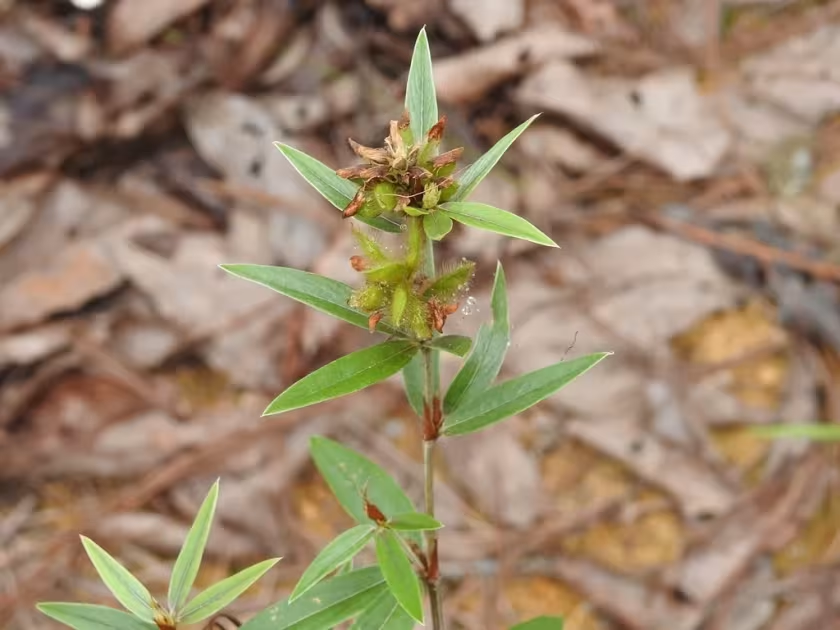
Eriosema crinitum is a perennial herbaceous plant belonging to the Fabaceae family. It is native to tropical regions of South and Central America, thriving in savanna-like ecosystems.
The cultivation of this species begins with seed preparation. Due to the hard seed coat, scarification is necessary to ensure uniform and efficient germination rates.
Sowing should coincide with the onset of the rainy season to provide consistent moisture, which is vital for the establishment of the deep taproot system.
In field conditions, spacing between rows should be sufficient to accommodate the bush-like growth habit of the plant and prevent mutual shading.
During the initial growth stages, plants are sensitive to competition. Weed control is essential to allow the crop to establish itself before the rapid growth phase begins.
Growing requirements
The plant performs best in well-drained, sandy-loam soils. It is remarkably adapted to acidic and nutrient-poor soils, which are typical for its native tropical environments.
Eriosema crinitum requires full sun exposure for optimal development. Prolonged shading will significantly reduce biomass production and overall plant vigor.
As a tropical species, it requires high temperatures throughout the year. The plant is sensitive to frost, which can cause severe damage or complete mortality of the foliage.
One of its key physiological advantages is drought tolerance, enabled by a deep root structure that accesses moisture from deeper soil layers during dry spells.
Agronomic management should include monitoring for adequate nitrogen fixation, as the plant forms symbiotic relationships with root nodule bacteria.
Main diseases and pests
The most common pests include various coleopterans that feed on foliage and developing pods, potentially impacting the seed yield significantly.
Root rot is a major threat, particularly in areas with poor drainage or during periods of excessive rainfall. Maintaining soil aeration is a primary preventive measure.
Defoliating insects can be problematic in high-density plantings. Integrated pest management strategies are recommended to maintain plant health without chemical overuse.
Fungal leaf diseases can occur in humid environments. Ensuring proper plant spacing improves airflow and significantly reduces the incidence of such infections.
Weeds are the primary challenge in young stands. Mechanical control or mulching is preferred during the first few months to ensure successful establishment.
Harvesting
Eriosema crinitum is primarily utilized as a forage crop due to its high protein content. It serves as a nutritious addition to livestock diets in tropical regions.
The harvest of green biomass should occur during the flowering phase, as the nutrient concentration in the leaves and stems is optimal at this stage.
Seed harvest requires careful timing; pods must be collected once they are dry but before they naturally dehisce and disperse their seeds on the ground.
Post-harvest processing involves threshing and cleaning the seeds to remove debris, followed by drying to reduce moisture content to safe storage levels.
Storage should be conducted in cool, dry conditions to maintain seed viability and protect the harvest from stored-grain insects and fungal decay.