
Eriosema macrostipulum
Eriosema macrostipulum
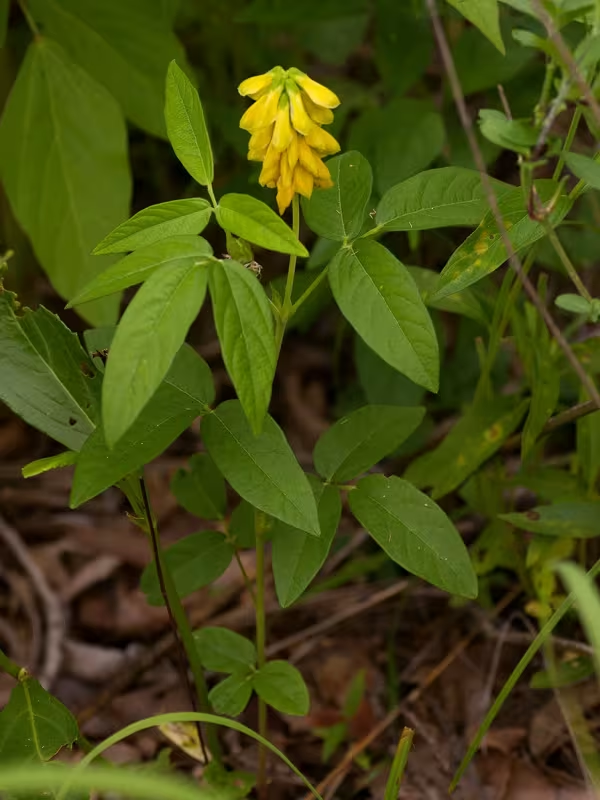
Description
Sowing dates
Eriosema macrostipulum is a member of the Fabaceae family, well-adapted to savanna environments. Sowing should coincide with the onset of the rainy season to ensure optimal soil moisture levels for seed germination and seedling establishment.
Seeds should be sown at a shallow depth in well-prepared, loose soil to facilitate emergence. Proper seedbed preparation, including the removal of competing vegetation, is essential for the successful development of the crop.
The spacing between rows should allow for adequate light penetration and airflow, reducing the risk of fungal diseases. Appropriate plant density is crucial for maximizing biomass production in forage-oriented systems.
Inoculation with compatible Rhizobium strains is highly recommended to enhance biological nitrogen fixation. This practice significantly increases soil fertility and promotes robust growth in nutrient-poor environments.
Careful monitoring during the first weeks post-sowing is necessary to protect the emerging seedlings from environmental stressors. Once established, the crop demonstrates higher resilience to varying climatic conditions.
Growing requirements
The plant thrives in well-drained soils, ranging from sandy to loamy textures. It is sensitive to waterlogging, which can lead to root system decay and hinder nutrient uptake, ultimately reducing yield.
High levels of solar radiation are required for optimal physiological performance. Shaded environments are not suitable for this species as they lead to stunted growth and reduced vigor of the vegetative parts.
A soil pH close to neutral is ideal for Eriosema macrostipulum. While it can adapt to slightly acidic conditions, soil testing and potential liming are advised if the pH deviates significantly from the target range.
The species prefers a tropical or subtropical climate with a clear distinction between wet and dry seasons. It is susceptible to frost damage, making it unsuitable for cultivation in temperate zones with cold winters.
Balanced nutrient availability, particularly phosphorus, is vital for the development of the root system and the efficiency of nitrogen fixation. Organic amendments can be used to improve soil structure and water retention.
Main diseases and pests
Fungal pathogens causing leaf spots are a common concern in high-humidity periods. Improving ventilation and maintaining clean field borders help in preventing the rapid spread of these diseases.
Insect pests, such as lepidopteran larvae, can cause significant damage to foliage. Integrated pest management strategies, involving biological control agents, are preferred to maintain the ecological balance of the field.
Weed infestation presents a major challenge during the early stages of growth. Mechanical weeding or the application of organic mulch around the plants is effective in minimizing competition for resources.
Root-knot nematodes may adversely affect the plant's health, particularly in monoculture systems. Rotating with non-host crops is a recommended practice to disrupt the life cycle of these soil-borne parasites.
Regular field scouting for early signs of distress, whether due to nutrient deficiency or pest activity, allows for prompt intervention. Healthy plants are generally better equipped to tolerate low-level infestations.
Harvesting
Forage harvesting should be conducted during the flowering stage, which marks the peak of nutritional value. Harvesting at this time ensures high protein content and digestibility for livestock consumption.
Cutting heights should be maintained at a level that allows for rapid regrowth of the plant, typically around 10–15 centimeters from the ground. Proper cutting management supports long-term field productivity.
Seed harvesting requires careful timing, typically when the pods reach physiological maturity and change color. Avoiding over-maturation is critical to prevent spontaneous shattering of the pods in the field.
Post-harvest processing involves drying the seeds in a well-ventilated area protected from direct rain and moisture. Proper drying is a prerequisite for long-term storage and maintaining high germination rates.
Modern machinery can be employed for harvesting tasks, provided the equipment settings are adjusted to account for the delicate nature of the seeds. Minimizing mechanical stress during harvest preserves seed quality.