
Eragrostiella
Eragrostiella
Eragrostiella is a genus of perennial grasses belonging to the Poaceae family. These plants are known for their compact tufted growth habit and narrow, linear leaves, which often display prominent venation and a tough texture adapted to their environment.
What the section contains


Eragrostiella
Native primarily to tropical and subtropical Asia, these grasses are distributed across regions such as India and Sri Lanka. They have adapted to survive in diverse and often harsh habitats, ranging from rocky terrain to sandy soils where nutrient availability is relatively low.
Climate-wise, Eragrostiella thrives in areas with a distinct dry season. Its ability to tolerate prolonged water scarcity makes it a significant subject for research regarding drought-resistant forage production and the reclamation of arid land areas.
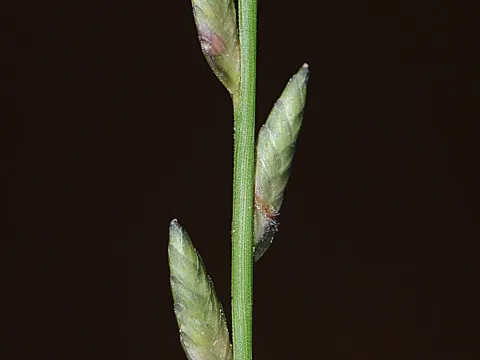
The botanical structure is marked by narrow, spike-like inflorescences. The spikelets are arranged in two distinct rows, which is a key morphological trait for taxonomical identification within the genus, separating it from related grass genera.
In agricultural practice, Eragrostiella is primarily utilized as a source of livestock forage in native pasturelands. Due to its dense root system, it plays a vital role in preventing soil erosion, particularly in sloped agricultural regions prone to topsoil loss.
Like many wild grass species, Eragrostiella is susceptible to common fungal pathogens, especially during the monsoon season when humidity levels rise significantly. These pathogens often manifest as foliar rusts or spots, reducing the nutritional quality of the forage.
Pest threats are typically localized, involving common orthopterans or caterpillar species that feed on grass foliage. Because Eragrostiella is rarely cultivated in intensive monoculture systems, it usually does not require extensive pest management programs.