
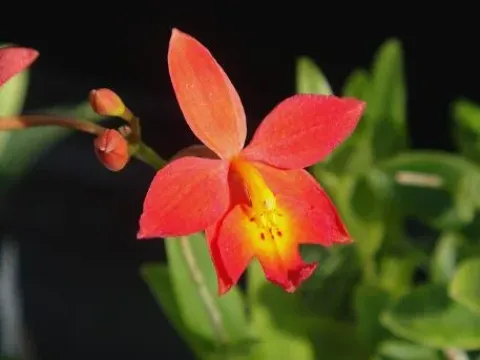
Epiphronitis
Epiphronitis
Epiphronitis is a genus of miniature epiphytic orchids belonging to the Orchidaceae family. In modern botanical taxonomy, these plants are often reclassified as part of the Sophronitis genus, which is crucial for identifying these specimens in collections.
What the section contains

Epiphronitis
In their natural habitat, these plants are native to the tropical forests of Brazil. They thrive in warm and humid environments with moderate diurnal temperature variations, typical of the high-altitude regions where they originate.
Successful cultivation of Epiphronitis requires high ambient humidity, ideally maintained between 60% and 70%. Good air circulation is essential to prevent moisture stagnation and the subsequent development of fungal infections around the root zone.
The ideal growing medium consists of specialized epiphytic mixes containing pine bark, charcoal, and sphagnum moss. The substrate must be lightweight and highly porous to simulate the natural growth conditions on tree bark and branches.
Lighting requirements include intense but indirect sunlight. Direct sun exposure can easily scorch the delicate leaves, so placing the plants in east or west-facing locations with light shading during peak hours is strongly recommended.
Primary threats to this plant include sucking pests such as mealybugs and spider mites. These insects tend to hide in leaf axils and around the roots, gradually weakening the plant's overall health and vigor.
Overwatering combined with poor ventilation significantly increases the risk of root rot. Diseases such as Phytophthora and various bacterial leaf spots can devastate these miniature orchids if the irrigation and environmental regimes are not managed properly.
When signs of disease or pest infestation appear, immediate treatment with broad-spectrum fungicides or insecticides is necessary. Prevention remains the best strategy, involving constant monitoring and maintaining strict hygiene in the growing space.
Water quality is a critical factor for protection. Utilizing hard or chlorinated water leads to salt buildup in the substrate, which damages root tissues and renders the plant more susceptible to opportunistic secondary infections.
Regular repotting every two years is a vital practice. This ensures the removal of degraded substrate, prevents the compaction of growing media, and guarantees optimal oxygen availability for the roots, keeping the plant healthy and robust.