
Wushan barrenwort
Epimedium wushanense T. S. Ying
Description
Growing requirements
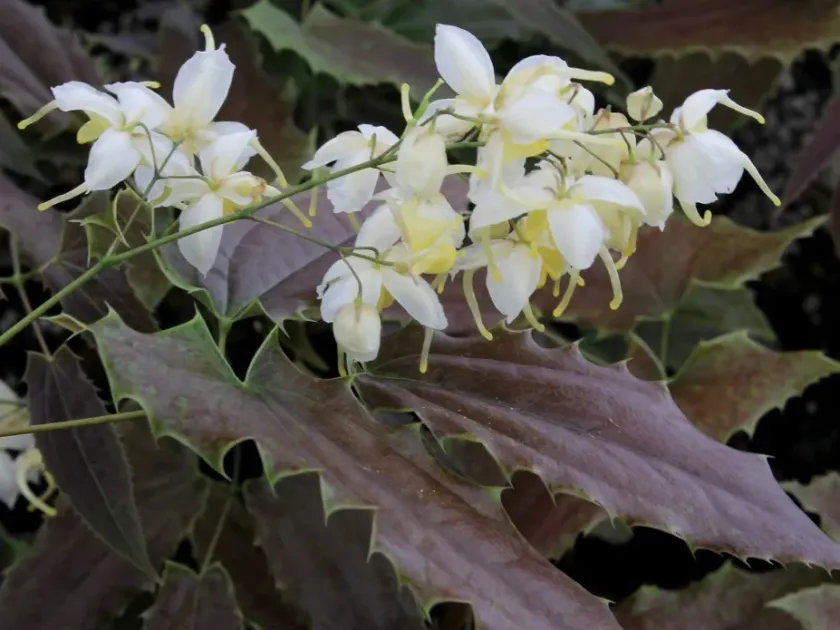
Wushan barrenwort (Epimedium wushanense) is a perennial flowering plant belonging to the Berberidaceae family. Native to the mountainous regions of Sichuan, China, it is highly valued for its striking, long, serrated foliage and distinctively shaped, elegant flowers.
The plant thrives in partial to deep shade, making it an excellent candidate for woodland gardening. It prefers protected locations where the soil remains cool and consistent, mimicking its natural forest floor habitat.
When selecting a site, ensure the soil is rich, well-draining, and contains high amounts of organic matter like leaf mold or compost. Avoid waterlogged conditions, as the rhizomes are prone to rot if soil aeration is poor.
Watering requirements are moderate; however, the soil should never dry out completely during the peak growing season. Applying a thick layer of organic mulch is essential to maintain soil moisture and regulate temperature around the roots.
Botanically, Epimedium wushanense is distinguished by its semi-evergreen habit in milder climates, where foliage may persist through winter. In cultivation, it requires minimal maintenance beyond seasonal clearing of debris and ensuring adequate moisture.
Main diseases and pests
The primary health concerns for Wushan barrenwort involve root rot and fungal foliage diseases. These issues typically emerge when the planting site has poor drainage or inadequate air circulation, leading to prolonged leaf wetness.
Garden pests such as slugs and snails are a common threat, particularly in the spring when new, tender growth emerges. Implementing manual barriers or using eco-friendly deterrents is the most effective way to protect the young foliage.
Leaf spots may occasionally appear if the environment is too humid and stagnant. If symptoms appear, it is recommended to prune away affected leaves immediately to prevent the spread of fungal spores to healthy tissue.
To keep the plants robust, avoid overhead watering, which can splash soil particles onto the leaves and facilitate disease transmission. Instead, apply water directly to the base of the plant to keep the foliage dry.
Annual inspection of the rhizomes and crown is advisable during the dormant season. If any signs of discoloration or softening are observed, it is vital to improve soil drainage and reduce irrigation frequency to stabilize the plant.