
Sellow's spikerush
Eleocharis sellowiana
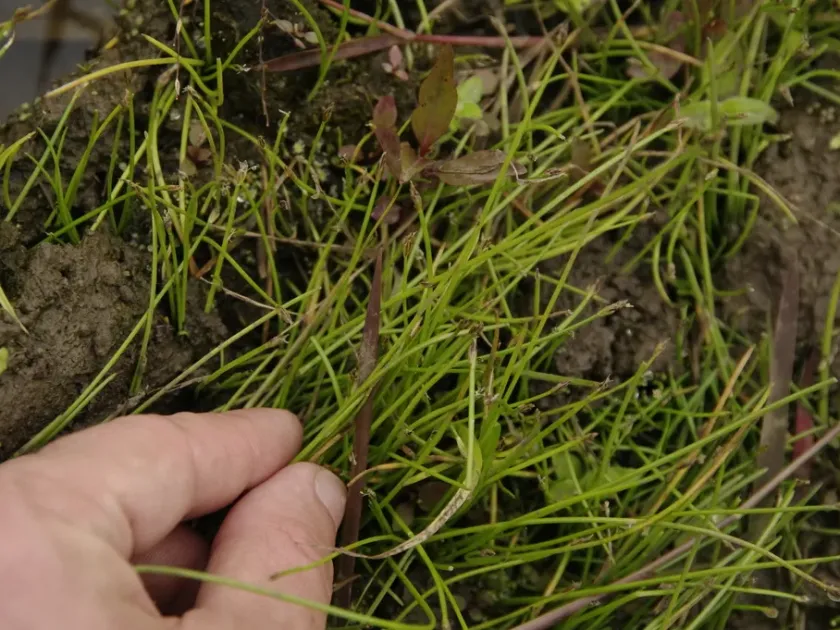
Description
Growing requirements
Sellow's spikerush (Eleocharis sellowiana) belongs to the Cyperaceae family. It is a perennial herbaceous plant that naturally thrives in high-moisture environments, preferring the banks of water bodies, flooded lowlands, and marshy soils native to South America.
This crop is characterized by its high adaptability to waterlogged substrates. The plant features a robust root system capable of efficiently extracting nutrients from the clay and silt soils typically found in floodplain landscapes.
For successful growth, soil acidity (pH) and constant access to water are critical factors. Optimal growing conditions include well-lit areas with long daylight hours, which ensures active development of green biomass.
The plant demonstrates significant resistance to temperature fluctuations within temperate climates; however, it is sensitive to prolonged dry spells, which lead to rhizome degradation and reduced agricultural yield.
From an agronomic perspective, this crop is considered a promising species for the reclamation of marshy lands and the establishment of natural biofilters on agricultural plots suffering from excessive moisture.
Harvesting
The economic use of Sellow's spikerush includes harvesting biomass for forage production in regions where other cereal crops fail to develop due to high moisture. The mowing process requires specialized machinery adapted for operation on soft and unstable, water-saturated soils.