
Sharp spikerush
Eleocharis acuta
Description
Growing requirements
Sharp spikerush (Eleocharis acuta) is a perennial herbaceous plant belonging to the Cyperaceae family. It is a widely distributed hydrophyte known for its ability to thrive in inundated or waterlogged environments, including marshes, riverbanks, and floodplains.
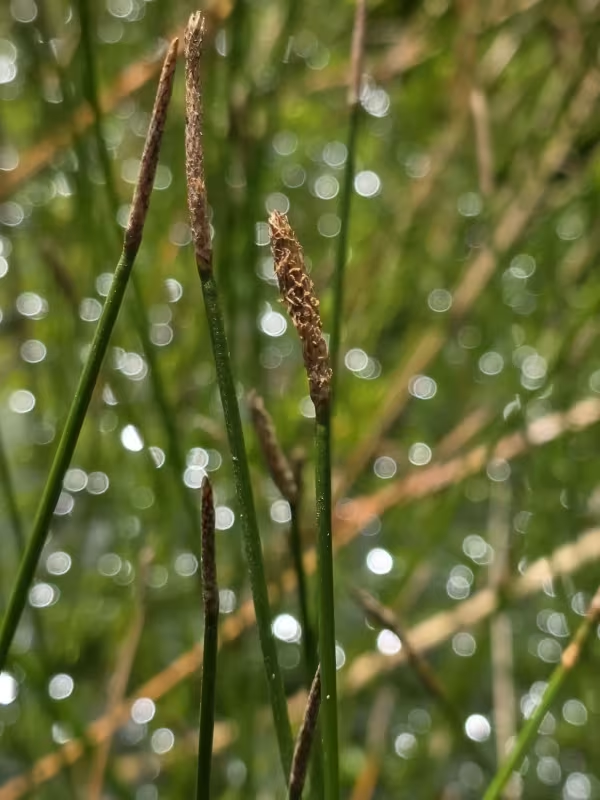
Native to Australia and New Zealand, this plant exhibits a robust rhizomatous growth habit, which allows it to colonize wet soils efficiently. Its botanical structure consists of slender, leafless green stems that arise from underground runners, forming dense mats that stabilize wetland substrates.
Regarding climatic and soil requirements, Eleocharis acuta prefers consistent moisture levels and performs best in heavy, fertile, or loamy soils with high organic matter content. It thrives in full sun exposure, although it displays tolerance for partial shading in warmer climates.
The agrotechnical management of this culture focuses on maintaining appropriate water levels. Unlike conventional crops, it requires saturated soil conditions throughout the growing season to prevent dehydration of its sensitive root system.
Economic and environmental applications include its use in riparian restoration, stabilization of irrigation canal banks, and phytoremediation projects aimed at filtering nutrient runoff from agricultural fields into surrounding water bodies.
Main diseases and pests
The primary diseases affecting Eleocharis acuta include various fungal pathogens such as rusts and leaf spot diseases, which typically flourish in stagnant, humid conditions with poor air circulation.
Pests, particularly specific insect larvae that bore into the succulent stems, can pose a risk to the health and aesthetics of the plant. Monitoring for signs of insect activity is essential, especially in high-density planted areas.
Environmental stressors often involve abrupt shifts in water levels or chemical pollution. While resilient, the plant can suffer from phytotoxicity when exposed to high concentrations of industrial chemicals or agricultural herbicide drift.
Competition from more aggressive aquatic weeds can inhibit the establishment of new spikerush plantings. Proper site preparation and initial weed control are critical steps for successful cultivation in restoration settings.
Overall management involves ensuring adequate water quality and consistent hydration to prevent the development of opportunistic pathogens that tend to exploit weakened or stressed plant tissues in stagnant waters.