
Needle spikerush
Eleocharis acicularis
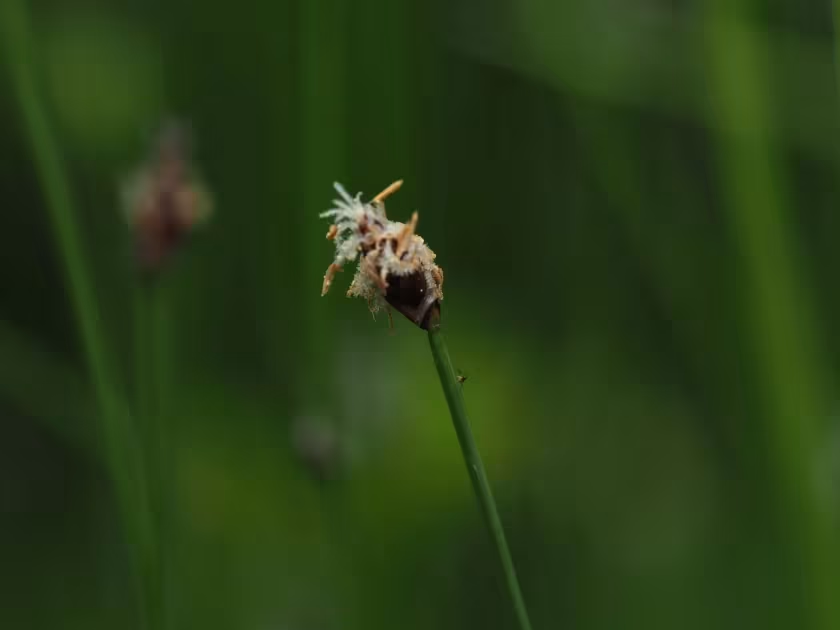
Description
Growing requirements
Needle spikerush (Eleocharis acicularis) is a perennial herbaceous plant belonging to the Cyperaceae family. It is naturally distributed across temperate and subtropical regions of the Northern Hemisphere, typically inhabiting mudflats, river margins, and shallow marshes.
The plant is characterized by its hair-like, bright green stems that rise from creeping rhizomes. This growth pattern allows it to form dense, grass-like mats that are highly valued for their aesthetic appearance in both aquatic and terrestrial landscaping projects.
The culture has strict requirements for light intensity; adequate light is necessary to maintain a prostrate growth habit. If the light level is insufficient, the plant will become leggy and lose its characteristic carpet-like density. Optimal growth temperatures range from 20°C to 28°C.
Regarding soil and substrate, Eleocharis acicularis thrives in nutrient-rich, fine-grained, permeable substrates. It performs best in environments where the root zone is saturated but well-oxygenated, allowing the rhizomes to spread efficiently without succumbing to rot.
The primary economic use of this plant includes the aquascaping industry, where it is utilized for creating "lawns" in freshwater aquariums. In outdoor gardening, it serves as an excellent ground cover for the damp margins of ornamental ponds and water features.
Main diseases and pests
The most significant threats to healthy growth include colonization by aggressive filamentous algae and cyanobacteria, which outcompete the spikerush for space and resources. Maintenance should focus on nutrient management to prevent these outbreaks from occurring.
Pest issues include snails, which may graze on the young, tender stems. Additionally, environmental stress caused by poor water circulation or the accumulation of organic debris can lead to fungal infections, causing the rhizomes to decay and the mats to collapse.