
Purple spikerush
Eleocharis atropurpurea
Description
Growing requirements
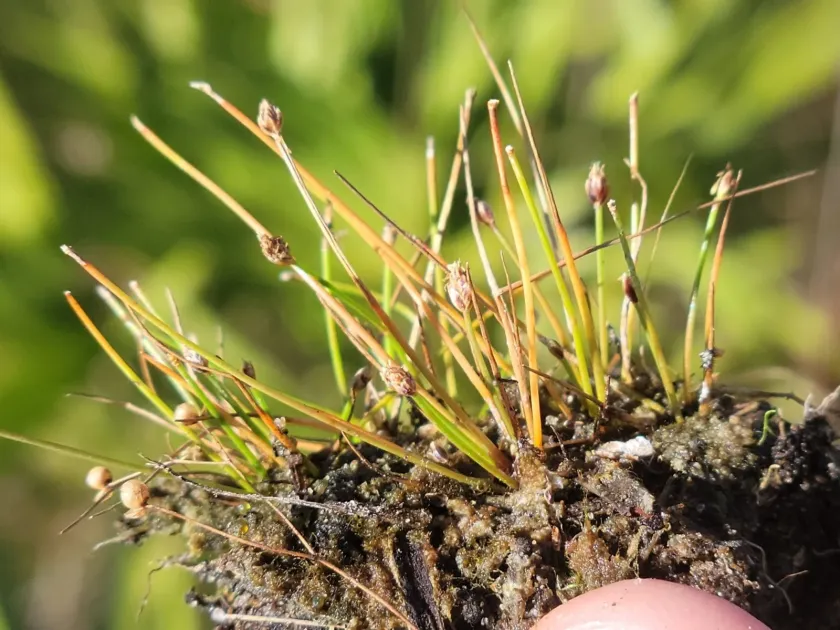
Purple spikerush (Eleocharis atropurpurea) is a small annual herb belonging to the Cyperaceae family. It is a specialized aquatic and semi-aquatic plant typically found in damp, sandy, or muddy habitats across tropical and temperate regions.
The plant is characterized by its slender, leafless culms that range from 5 to 15 centimeters in height. Its most identifying feature is the dark purple, terminal spikelet that gives the species its common and scientific name.
Cultivation requires specific environmental conditions, primarily focusing on stable moisture levels. The species thrives in areas with shallow water or consistently wet, fine-textured soils that allow for efficient root penetration and nutrient uptake.
Regarding climate, this plant is sensitive to frost and performs best in warm, sunny locations. It requires high solar radiation to promote vigorous development of the culms and subsequent seed production by the end of its life cycle.
Soil management involves ensuring a neutral to slightly acidic pH, which helps maintain the biological availability of essential micronutrients in the saturated substrate required for this specific wetland species.
Main diseases and pests
The most significant pathological threats to purple spikerush include fungal infections, such as blight or root rot, which typically manifest in stagnant water environments lacking proper circulation.
Insects, particularly larvae of specialized beetles and some dipteran species, are known to feed on the tender culms, potentially causing severe damage to the plant's structural integrity.
Weed competition is a constant threat during the early establishment phase, as the plant grows relatively slowly and can be easily overshadowed by faster-growing invasive aquatic species.
Excessive nutrient accumulation in the water, leading to algal blooms, can create an anaerobic environment that effectively kills the root system of this species.
Integrated pest management strategies for this plant focus on water quality maintenance, physical removal of competing weeds, and periodic flushing of the water supply to prevent the accumulation of pathogens.