
Slender spikerush
Eleocharis attenuata
Description
Growing requirements
Slender spikerush (Eleocharis attenuata) is a perennial herbaceous plant belonging to the Cyperaceae family. It is specifically adapted to wetland habitats and is frequently found in areas with high water tables, marshes, and periodically flooded meadows.
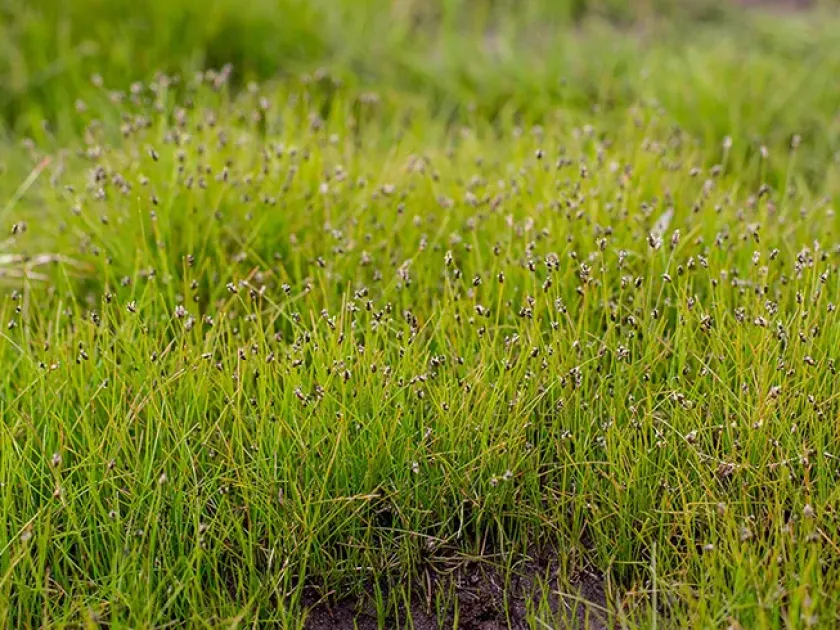
Native to North America, this species thrives in environments ranging from silt-heavy riverbanks to water-saturated sand deposits. Its botanical structure features slender, cylindrical stems arising from rhizomes, which allow the plant to create a dense, erosion-resistant mat.
Regarding soil and moisture requirements, Eleocharis attenuata demands consistent hydration. It performs best in neutral to slightly acidic soils where the moisture content remains stable throughout the growing season, even during dry summer months.
Climatic preferences for the culture include temperate conditions with sufficient sunlight exposure. The plant requires a long growing season to build its root network, though it possesses a degree of resilience against moderate frost during its dormant phase.
Economically, this plant is primarily utilized for ecological restoration, particularly in bioengineering projects designed to stabilize shorelines. Additionally, it serves as an important component in the natural habitat of various aquatic organisms, supporting biodiversity.
Main diseases and pests
Major threats to Eleocharis attenuata include fungal pathogens that emerge under stagnant water conditions. Root rot and stem blights can decimate a population if the water quality is poor or if circulation is restricted for an extended period.
Pests such as specialized insects and larvae can feed on the tender stems, weakening the plant's overall vitality. Regular inspection is crucial to prevent these biological agents from causing significant damage to the established planting area.
Hydrological instability poses a significant risk to the plant. A rapid drop in water levels or complete desiccation of the substrate during the peak growth cycle can lead to metabolic stress, rendering the crop highly susceptible to secondary infections.
Competition from aggressive invasive aquatic weeds is another major concern. Rapidly growing plants can outcompete the slender spikerush for nutrients and light, necessitating manual management and control of the plant community structure.
Environmental stressors, such as the accumulation of heavy metals or excessive fertilizer runoff into the water, can interfere with the physiological processes of the spikerush. Maintaining clean water sources is essential for the sustainable production and health of the species.