
Beaked spikerush
Eleocharis rostellata
Description
Growing requirements
Beaked spikerush (Eleocharis rostellata) is a perennial herbaceous plant belonging to the Cyperaceae family. It is native to various wetland environments across North and South America, frequently found in marshes, salt meadows, and along the banks of water bodies.
The crop thrives in saturated conditions, requiring constant moisture for optimal physiological function. It is classified as a hydrophytic species that excels in marshy substrates where drainage is poor and the water table remains at or above the soil surface.
Soil requirements involve high organic matter content and a capacity to retain water throughout the growing season. Interestingly, the species is well-adapted to saline or brackish soil conditions, a trait that makes it superior to many other wetland grasses in specific ecological contexts.
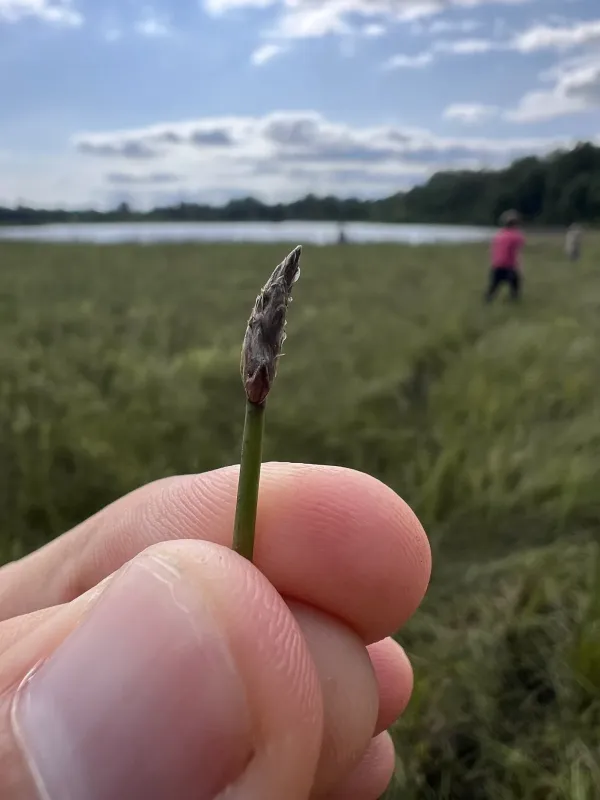
Botanically, it is characterized by slender, erect stems that often reach lengths of 30 to 80 centimeters. A distinctive feature is the proliferation method: the stems tip-root upon contact with moist ground, which allows the plant to form dense, resilient colonies in the wild.
In agricultural and environmental practice, Eleocharis rostellata is highly valued for erosion control, phytoremediation of contaminated water, and its utility in restoring wetland habitats. Its robust root system provides excellent soil stability while offering habitat for local aquatic fauna.