
Few-flowered spike-rush
Eleocharis quinqueflora
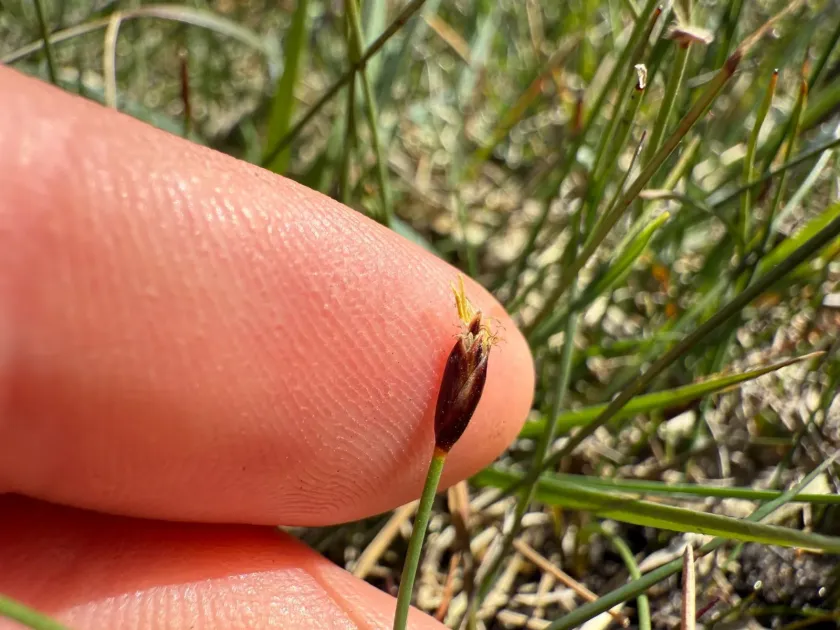
Description
Growing requirements
Few-flowered spike-rush (Eleocharis quinqueflora) is a perennial herbaceous plant belonging to the Cyperaceae family. It is typically found in wet, marshy habitats, acting as a crucial component of wetland ecosystems and riparian zones.
The plant requires high moisture levels and thrives in saturated soils, including peatlands and boggy meadows. It is highly adapted to cooler climates and requires sufficient sunlight to ensure optimal photosynthesis and flower development.
Soil composition is important; it prefers mineral-rich or organic wetland soils that maintain a consistent water supply. While it can tolerate various water depths, it performs best in shallow waters or areas where the water table is at or above the surface.
In terms of agricultural and environmental utility, this species is valued for its soil-binding properties. It is often used in ecological restoration projects to prevent shoreline erosion and improve water quality through natural filtration.
Biologically, it features slender, grass-like stems and small, distinct inflorescences containing few flowers. Its propagation via rhizomes allows it to spread efficiently, creating dense mats that protect the substrate from degradation.
Main diseases and pests
The primary threats to Eleocharis quinqueflora include water pollution and nutrient runoff, which can shift the ecological balance and favor more aggressive, invasive aquatic plant species.
Fungal pathogens and root rot may occur in stagnant water environments where oxygen levels are depleted. Maintaining moving or well-circulated water is a key preventive measure against such infections.
Pests such as aquatic snails or certain larval insects may graze on the stems, particularly during the early growing stages. While these usually cause minor damage, severe infestations can stunt plant growth.
Invasive weeds that grow faster can outcompete the spike-rush for nutrients and light. Regular maintenance of the site, involving the removal of competing flora, is necessary to keep the population stable.
Environmental factors like drainage of wetlands pose the most significant risk to the existence of this plant. Protecting the natural hydrology is fundamental for successful cultivation and conservation of the species.