
Small spike-rush
Eleocharis pusilla
Description
Growing requirements
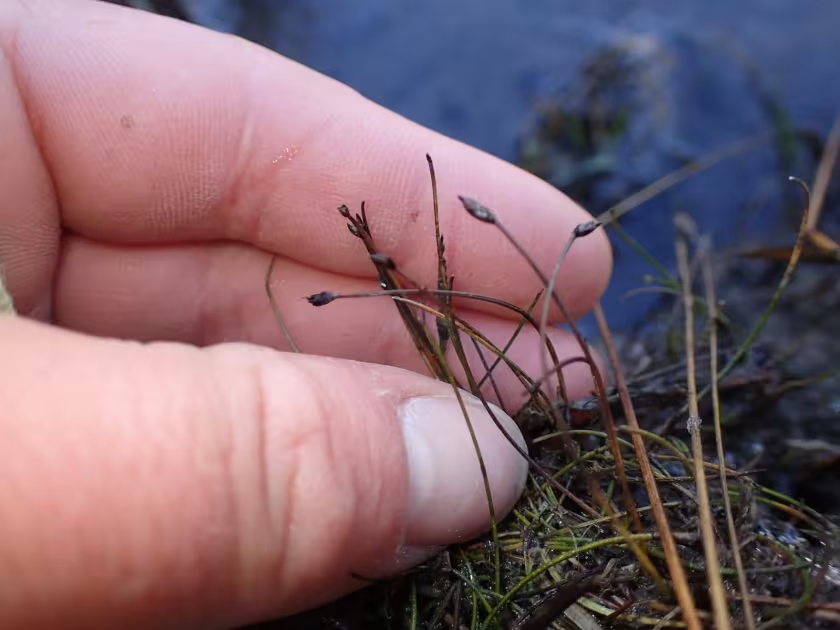
Small spike-rush (Eleocharis pusilla) is a perennial herbaceous plant belonging to the Cyperaceae family. It is widely recognized for its fine, needle-like foliage that creates lush, carpet-like ground cover in moist environments.
Native primarily to Australia and New Zealand, this plant has spread globally due to its popularity in ornamental horticulture. It typically inhabits damp, marshy areas, edges of ponds, and shallow waters where the soil remains consistently saturated.
Cultivation requirements for this species are centered on light and moisture availability. It thrives in full sun conditions, which are essential to maintain its compact growth habit and prevent the stems from becoming leggy or etiolated.
The preferred soil profile is a nutrient-rich, moist, and slightly silty substrate. When grown in aquatic environments, the plant relies on a substrate that provides adequate nutrient exchange, often requiring supplementation with root tabs in low-nutrient aquarium setups.
Agronomic management involves maintaining constant moisture levels and ensuring the plant has space to spread via its creeping rhizomes. It is an aggressive grower once established, capable of forming a dense mat that effectively suppresses most weeds.
Main diseases and pests
The most significant threats to the small spike-rush involve competition from invasive algae and environmental imbalances. If the light levels drop or nutrient levels become too high, algal growth can overwhelm the delicate stems of the spike-rush.
In outdoor environments, the plant is relatively pest-resistant, although slugs and snails can occasionally cause damage to the soft, emerging stems during wet weather, potentially creating bare patches in the green carpet that require patching.
Harvesting
The primary horticultural application of Eleocharis pusilla is as an ornamental ground cover in landscaping and a foreground plant in aquascaping. It provides a unique aesthetic, mimicking a manicured lawn in water-based designs.
Maintenance includes periodic trimming, which is necessary to manage the height and density of the mat. Trimming encourages the plant to spread laterally, thickening the carpet and ensuring uniform growth throughout the designated area.