
Philippine spikerush
Eleocharis philippensis
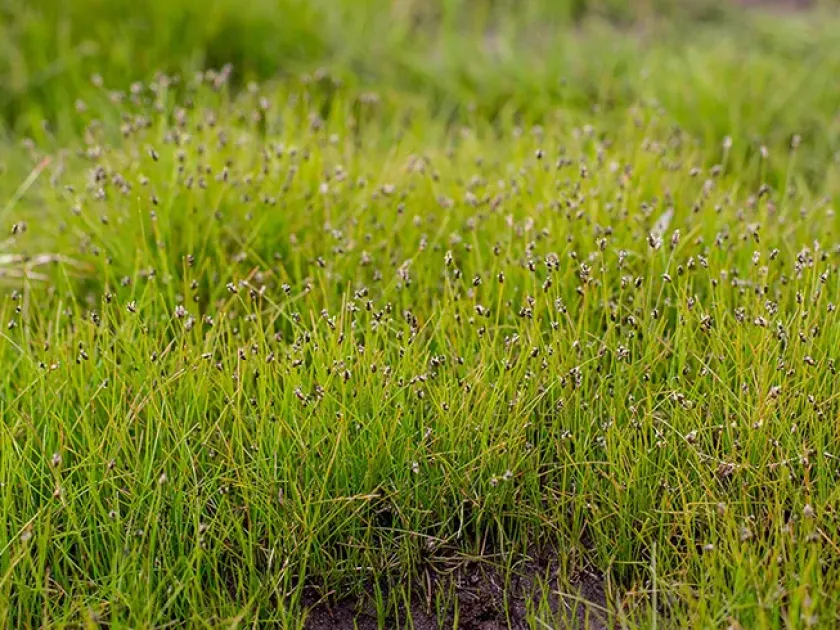
Description
Sowing dates
The Philippine spikerush is a perennial herbaceous plant belonging to the Cyperaceae family. In agricultural practice, it is primarily propagated vegetatively by dividing rhizomes during the active growing season.
The optimal time for planting begins when water and soil temperatures reach 20–25 degrees Celsius. Ensuring adequate substrate moisture during the first few weeks post-planting is essential for successful root establishment.
Planting density is determined by the specific purpose of the plantation, typically ranging from 10 to 15 clumps per square meter to promote full ground coverage. Commercial seed use is less common due to the difficulty of harvesting and the prolonged germination period.
Field preparation involves clearing water bodies or wetlands of invasive weeds that may compete with the spikerush. The implementation of drainage systems or controlled paddies allows for precise water level management throughout the growth cycle.
The species adapts well to waterlogged conditions and rapidly colonizes new areas through active underground runner growth. Maintaining a stable water level is a critical factor for seedling survival during the first year of cultivation.
Growing requirements
Eleocharis philippensis is a typical hydrophyte that thrives in shallow water, floodplains, and shore zones with clay or silty soils. The crop requires high light exposure and performs poorly under deep shade conditions.
The ideal water depth for normal growth ranges from 5 to 20 centimeters, although the plant can withstand temporary soil drying if groundwater levels remain sufficiently high. Water chemistry plays a secondary role, as the species exhibits a wide ecological amplitude.
Soils should be rich in organic matter to promote rapid biomass accumulation. A neutral to slightly acidic soil pH is most favorable for the development of the root system in the Philippine spikerush.
For intensive cultivation, temperature management is required to prevent rhizome freezing in colder seasons. In regions with harsh winters, maintaining a minimum water depth provides a protective thermal layer for plant overwintering.
Agrotechnology includes periodic application of complex mineral fertilizers if the nutritional value of the silt is insufficient to sustain high productivity. Nitrogen fertilization significantly stimulates rapid vegetative growth during the summer season.
Yield
The primary yield indicator for Philippine spikerush is the volume of harvested aerial green mass, which is utilized in fodder production and the textile industry. High planting density allows for multiple harvests per season, provided the shoots are allowed to recover.
Yield is directly dependent on solar radiation levels and the availability of mineral nutrients in the sediment. Efficient water management can increase biomass yield by 20–30 percent compared to natural wild stands.
Harvesting is performed during the peak growth phase, before the onset of active seed maturation, to preserve the nutritional quality of the raw material. Once cut, the plants regenerate rapidly via their rhizome system, ensuring multi-year productivity from a single plot.
In tropical and subtropical climates, where the species is most widespread, year-round harvesting is possible with short intervals. Modern mechanization techniques help minimize losses when cutting in difficult-to-access wetland areas.
The economic efficiency of Philippine spikerush is further enhanced by its role as a biofilter, improving water quality in aquaculture sites. The produce finds markets in the manufacture of woven goods, eco-friendly packaging, and dietary feed supplements.
Main diseases and pests
The Philippine spikerush is characterized by high resistance to typical agricultural pests, though it can be damaged by certain aquatic insect species. Larvae that feed on the soft stem tissues can reduce total crop mass.
Fungal diseases causing stem rot may affect plantations under conditions of excessive stagnant water and lack of natural water aeration. Prevention relies on maintaining optimal planting density to discourage infection clusters.
Negative impacts can arise from invasive plant species like water hyacinth or common reeds, which may outcompete the spikerush. Regular weeding and ongoing monitoring of plantation health are essential protective measures.
Changes in ecological conditions, such as water pollution from industrial runoff, can lead to root system degradation. The species is sensitive to sudden spikes in heavy metal concentrations within the bottom sediments.
Biological control methods are recommended to preserve the ecosystem balance within the water body. Avoiding excessive pesticide use protects the beneficial microflora involved in the natural mineralization of organic debris.
Harvesting
Harvesting Philippine spikerush is conducted using mechanized mowers or manually with specialized sickles for smaller plots. Following harvest, the material undergoes primary processing, which includes outdoor drying.
An important step is the proper grading of raw material by stem length and quality to suit different processing needs. Younger, more tender shoots are preferred for fiber production, while the entire green mass is used for fodder purposes.
Drying must be performed in the shade to prevent loss of natural color and stem tensile strength, which is critical for high-quality woven products. Proper moisture control during storage prevents mold growth and material deterioration.
The harvesting process must be coordinated with the plant's growth cycle to avoid damaging the rhizome system, which ensures regeneration for the following year. Early morning, after the dew has evaporated, is the optimal time for harvesting to facilitate drying.
Transportation of the harvested material requires care, as the stems can become brittle when dried. Compressing the material into bales significantly optimizes logistics costs when shipping large batches to processing facilities.