
Dwarf hairgrass
Eleocharis parvula
Description
Sowing dates
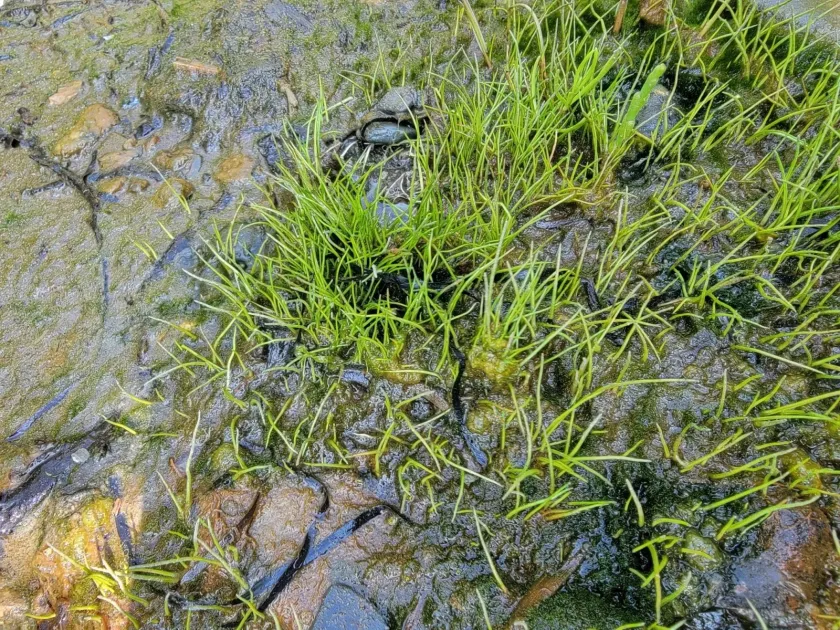
Dwarf hairgrass (Eleocharis parvula), a member of the Cyperaceae family, is a quintessential carpet plant in the world of aquascaping. It does not grow from seeds in standard aquarium settings; instead, it propagates through extensive rhizome runners that spread horizontally.
To establish a carpet, the plant should be divided into small, individual plugs containing several stems each. These plugs are planted into the substrate using tweezers, spacing them approximately 2 to 3 centimeters apart to encourage uniform coverage.
The planting process requires a fine-grained, nutrient-rich substrate. This allows the delicate roots to penetrate easily and the runners to spread without obstruction, eventually forming a thick, uniform mat of lush green foliage.
Patience is required during the initial growth phase, as the plant needs time to adapt to its new environment and develop a strong root system. During this period, minimal disturbance to the substrate is recommended to prevent uprooting.
Once established, Eleocharis parvula creates a dense mat that can effectively compete with other plants. It is highly valued for its ability to mimic natural grassy meadows in aquascape designs, providing a soft texture to the foreground of the tank.
Growing requirements
Dwarf hairgrass thrives in moderate to high light conditions. Providing an intense light source for 8–10 hours a day is essential to ensure that the blades remain short, compact, and vibrant rather than growing long and spindly in search of energy.
The optimal water temperature ranges from 20 to 26 degrees Celsius. Consistency is key, as fluctuating temperatures can stress the plant and inhibit the development of new runners, potentially leading to patches of bare substrate.
Carbon dioxide (CO2) supplementation is highly recommended for accelerated growth and long-term health. While it can survive without high CO2, the addition of injected CO2 makes a significant difference in the density and health of the carpet.
Water chemistry should be kept stable, with a pH preference of 6.0 to 7.5. Regular water changes of about 20–30% per week are crucial to prevent the buildup of nitrate and phosphate levels that could trigger algae growth.
A nutrient-rich substrate is vital, as the plant absorbs a significant portion of its nutrients through the roots. Using root tabs or specialized aquarium soil enriched with iron will promote robust growth and intense coloration.
Main diseases and pests
The most significant threat to Dwarf hairgrass is the infestation of hair algae, which can quickly overwhelm the fine stems. Prevention through a balanced lighting and nutrient regime is the most effective way to protect the carpet.
Herbivorous fish and snails can pose a threat by feeding on the tender, freshly growing tips of the grass. It is important to select aquarium inhabitants that are compatible with delicate plant species to ensure the survival of the carpet.
Sediment accumulation can suffocate the plants and create anaerobic zones in the substrate, which leads to root rot. Regular maintenance to clean the substrate surface is necessary to maintain proper oxygenation for the root zone.
Deficiency in essential trace elements, particularly iron, often leads to chlorosis. This manifests as yellowing blades that eventually turn white and decay, signaling a need for a change in fertilization strategy.
Poor water circulation can lead to localized stagnation, which provides a breeding ground for cyanobacteria. Maintaining a good filter flow ensures that nutrients and CO2 are evenly distributed, protecting the plant from environmental stress.