
Common spikerush
Eleocharis palustris
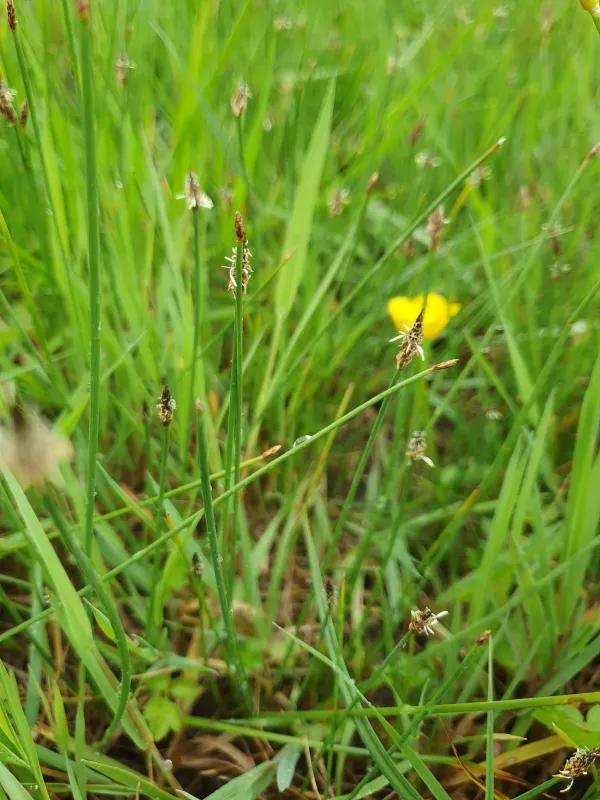
Description
Sowing dates
Planting common spikerush is best performed through vegetative propagation by dividing rhizomes during the early spring season.
Establishing new fields is most effective when the soil has warmed sufficiently, ensuring rapid root development before the onset of hot summer days.
Rhizomes should be placed in moist, nutrient-rich substrate at a depth of 5 to 10 centimeters to prevent them from drying out.
A density of approximately 6 to 10 plants per square meter is recommended to achieve full coverage within a relatively short period.
Ensure that the planting site has access to a consistent water supply or high moisture levels, as water availability is critical for establishment.
Growing requirements
Common spikerush, a member of the Cyperaceae family, thrives in wetlands, marshes, and along the margins of ponds or slow-moving streams.
It prefers sunny, open environments where it can receive maximum sunlight, which is necessary for vigorous growth and biomass production.
The plant is highly adaptive to various soil types, including silty or clay-heavy soils, provided that they remain saturated with water.
Optimal growth temperatures for this species range between 18 and 25 degrees Celsius, making it well-suited for temperate climates.
It is resilient against water fluctuations but performs best in shallow water depths ranging from 10 to 40 centimeters.
Yield
As a forage crop, common spikerush can provide a sustainable yield of green biomass when managed under controlled wetland conditions.
Annual yields vary depending on soil fertility and water quality, typically ranging between 3 to 5 tons of dry matter per hectare.
The plant demonstrates high recovery rates after harvesting, allowing for multiple cuts during a single long growing season if nutrient levels are maintained.
Proper fertilization using nitrogen-based aquatic-safe compounds can significantly enhance the volume and quality of the produced vegetation.
Long-term yield stability is a major benefit, as established stands can remain productive for many years without the need for reseeding.
Main diseases and pests
Common spikerush is generally hardy, though it may be susceptible to fungal infections during periods of poor water circulation or stagnant conditions.
Certain insect larvae that inhabit aquatic environments can occasionally damage the rhizomes, leading to reduced vitality of the plant stand.
Competition from invasive reeds or cattails can pose a significant threat, as these larger plants may outcompete spikerush for light and space.
Poor water quality or excessive chemical runoff can inhibit plant health, making the stand more vulnerable to common aquatic diseases.
Regular monitoring of the field is necessary to identify early signs of pathogen stress or pest infestations before they spread across the stand.
Harvesting
Harvesting should be timed to occur before the plants reach full maturity to maintain high nutritional content for animal fodder.
Using shallow-water harvesting equipment allows for efficient collection of biomass without damaging the underlying root systems.
Post-harvest management involves quick drying of the biomass to prevent decay and preserve the quality of the raw material.
Leaving a 15-centimeter stubble height during harvesting ensures that the plant can regenerate quickly and survive the upcoming winter period.
The harvested product serves as a versatile resource, used extensively as livestock bedding or processed into supplementary animal feed.