
Ovate spikerush
Eleocharis ovata
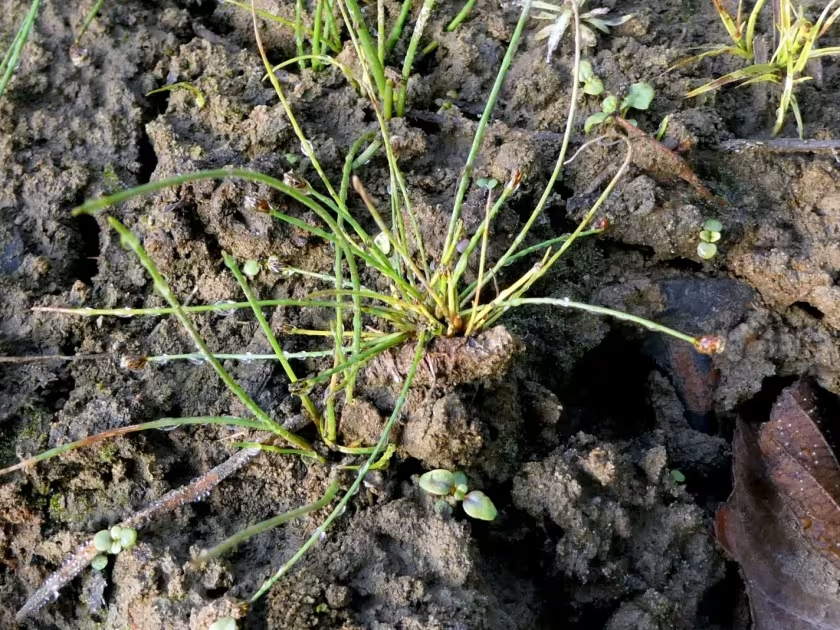
Description
Sowing dates
Ovate spikerush (Eleocharis ovata), a member of the Cyperaceae family, is an annual grass-like plant adapted to wetland habitats. Its life cycle begins with seed germination in moist, exposed mudflats, typically following receding water levels in spring.
In agricultural settings, sowing is best performed in late spring when the soil has warmed sufficiently. The seeds require surface placement or minimal soil coverage, as light exposure is often a critical factor for the successful transition from dormancy to active growth.
A consistent moisture level is mandatory during the germination stage. If the substrate dries out, the delicate root systems of the emerging seedlings are prone to desiccation, which can lead to a significant loss of plant density.
Uniform distribution of seeds is recommended to prevent overcrowding. Proper spacing ensures adequate air circulation, which is vital for the health of the young plants and helps mitigate the risks associated with excessive humidity.
For large-scale cultivation, pre-treatment of seeds might be necessary to ensure uniformity. Storing seeds in controlled conditions before planting helps to sync the germination process, allowing for more predictable crop development.
Growing requirements
Ovate spikerush is an obligate wetland species, demanding soils that remain saturated throughout its growing season. It thrives in muddy, silty, or peaty environments, often near the margins of ponds or within flood-prone plains.
The plant is highly photophilous and requires full sun exposure to thrive. Any form of competition from taller aquatic vegetation or dense algal mats will significantly impede its growth and reduce the final biomass yield.
Soil nutrient status should be high, with a focus on available nitrogen and phosphorus. These minerals are typically sourced from natural alluvial deposits, but in intensive agricultural systems, they may need supplementation via specialized wet-soil fertilizers.
Climate adaptability is a strength of this species; it copes well with the temperature fluctuations typical of temperate zones. However, it requires a stable hydrological regime, as it cannot survive extended periods of complete soil desiccation.
Management of the water table is the most critical agricultural task. Maintaining a shallow water layer or a constantly damp soil surface ensures that the metabolic processes of the plant continue without interruption during the heat of summer.
Main diseases and pests
Fungal pathogens represent the primary threat to the crop, especially in conditions with stagnant water and high humidity. These diseases can quickly compromise the stem integrity and lead to widespread rot within the patch.
Pests such as aquatic insects and certain larvae are known to graze on the succulent stems of the spikerush. Their activity can cause structural damage and weaken the plant, making it more susceptible to secondary infections.
Invasive algae and aggressive aquatic weeds are major competitors for light and nutrients. Without proper management, these unwanted species can displace Ovate spikerush within a single growing season.
Proactive monitoring of plant density is essential. If the stand becomes too thick, the reduced airflow creates microclimates favorable for disease outbreaks, necessitating thinning or managed water flow to improve aeration.
Integrated pest management, focusing on biological control and environmental manipulation, is preferred over chemical solutions to ensure the health of the surrounding ecosystem and maintain the quality of the harvested biomass.