
Eleocharis ochreata
Eleocharis ochreata
Description
Growing requirements
Eleocharis ochreata is a perennial plant belonging to the Cyperaceae family. It is a specialized species adapted to wetland environments, demonstrating significant resilience in waterlogged soil conditions.
The plant originates from the tropical and subtropical regions of the Americas. Its natural range encompasses diverse wetland habitats, including riverbanks, swamps, and shallow pond margins where moisture is consistently available year-round.
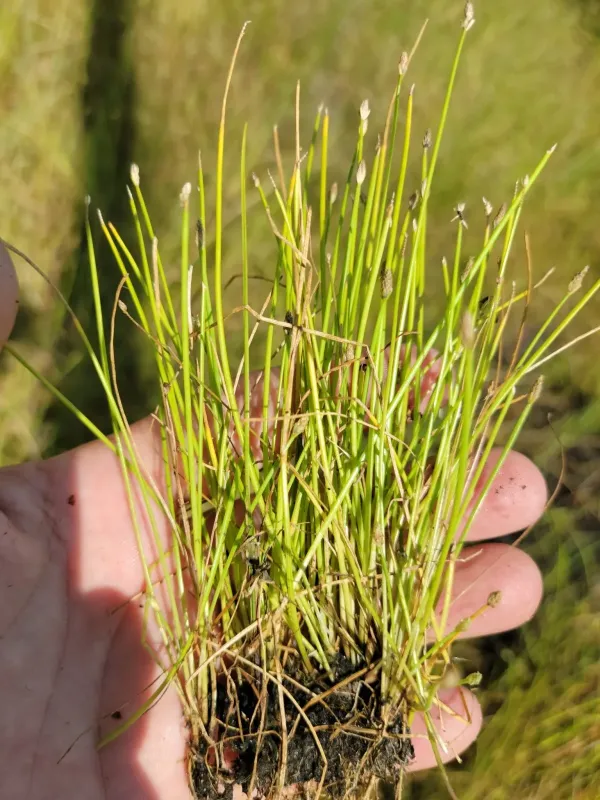
Botanically, the plant is characterized by its rhizomatous growth habit and slender, rush-like culms. It lacks prominent leaves, as the stem itself serves as the primary organ for photosynthesis, and its inflorescence consists of distinct, terminal spikelets.
Successful cultivation requires consistently moist to saturated substrate conditions. The species prefers full sun exposure and warm climatic conditions, as it is not tolerant of frost or prolonged cold periods that characterize temperate zones.
The main use of this plant is in ornamental pond landscaping and environmental restoration projects. Its dense root system and rhizomes play a crucial role in soil stabilization and the filtration of excess nutrients from water sources.
Main diseases and pests
The most common disease threats include root and crown rots, typically triggered by anaerobic conditions in overly stagnant water. Fungal pathogens can become problematic if the surrounding water quality deteriorates.
Insect pests include various species that feed on the soft tissue of the culms. Additionally, herbivorous mollusks, such as snails, can significantly impact the vegetative growth if the plant is grown in large, managed aquatic collections.