
Blunt spikerush
Eleocharis obtusa
Description
Sowing dates
Sowing blunt spikerush is best conducted in early spring once soil temperatures reach a consistent 15 to 20 degrees Celsius. Surface sowing is recommended, as the seeds are minute and require light exposure for germination.
For efficient crop establishment, seeds should be broadcasted over prepared moist substrates. It is crucial to maintain a consistent water level, preventing both the desiccation of the seedbed and excessive depth that could bury the seeds too deeply.
Planting density should be managed to ensure adequate space for each cluster, facilitating better airflow and light penetration. While the species often propagates via self-seeding, managed stands require periodic thinning to maintain optimal growth metrics.
In wetland restoration projects, seed density is often adjusted based on the required coverage area. Agronomists often use specialized equipment to ensure even distribution in large-scale field applications to prevent patchy growth.
The use of stratification prior to sowing can improve germination uniformity, especially in cooler climates. This practice helps align the emergence of seedlings with the peak favorable weather conditions of the late spring season.
Growing requirements
Blunt spikerush (Eleocharis obtusa) is an annual herbaceous plant belonging to the Sedge family (Cyperaceae). This plant is typically found in moist, muddy habitats, including riverbanks, pond margins, and seasonally flooded fields.
The species is highly adapted to hydrophytic conditions, requiring constant soil moisture to thrive. It performs best in open, sunny environments where competition with other taller wetland vegetation is limited during the early growth stages.
Soil requirements for optimal development include silt or clay-based substrates with high organic content. The plant is sensitive to drought, and its survival and growth rate are directly proportional to the consistency of water availability in its root zone.
Regarding climate, blunt spikerush prefers temperate conditions. It is a thermophilic species during its germination and growth phase, making it most productive in areas with warm summers and ample precipitation.
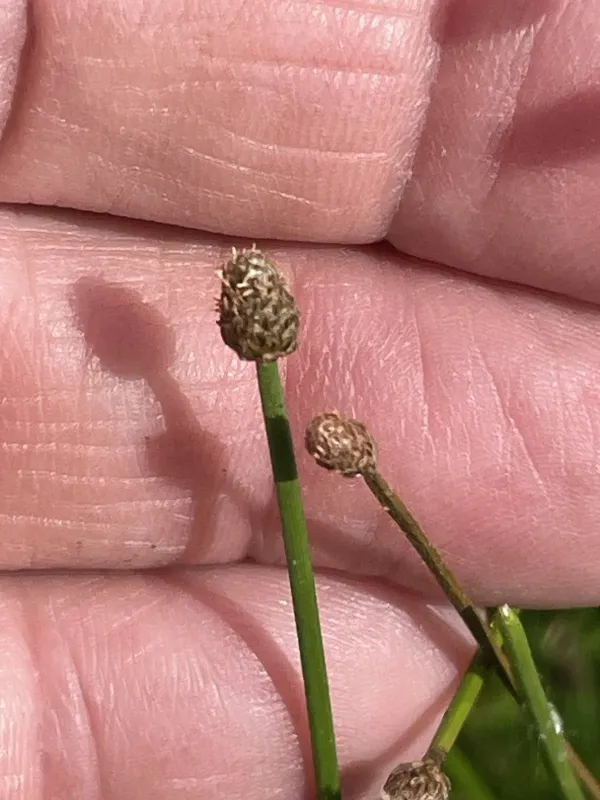
Botanically, the plant is characterized by its tufted stems, which grow to a modest height, and its distinct blunt-tipped spikelets. These structures are vital for identification and signify the reproductive maturity of the plant population.
Harvesting
Harvesting blunt spikerush typically involves cutting the foliage at the end of the vegetative cycle. This is usually performed in late summer or early autumn to prevent the over-accumulation of dead organic matter in the water bodies.
The mechanical harvesting of this culture requires lightweight equipment to avoid disturbing the fragile soil structure of the wetland banks. Maintaining the integrity of the soil is essential to ensure continued stability of the managed area.
The gathered biomass is primarily utilized for composting or as a mulch material. In industrial applications, such as phytoremediation, the harvest is critical because it removes accumulated nutrients and potential pollutants sequestered by the plant.
Post-harvest management involves the removal of residues to improve the water quality and prevent excessive oxygen demand during decomposition. Proper disposal of biomass is a key agronomic step in aquatic ecosystem maintenance.
Yields are measured in terms of biomass production per unit area. High-density stands provide maximum benefits, acting as an effective filter for excess nutrients, which contributes significantly to the overall health of the managed ecosystem.