
Sand spikerush
Eleocharis montevidensis
Description
Growing requirements
Sand spikerush (Eleocharis montevidensis) is a perennial herbaceous plant belonging to the Cyperaceae family. Originating from the Americas, this species is naturally found in riparian zones, wetlands, and along the margins of various water bodies, demonstrating strong adaptation to humid environments.
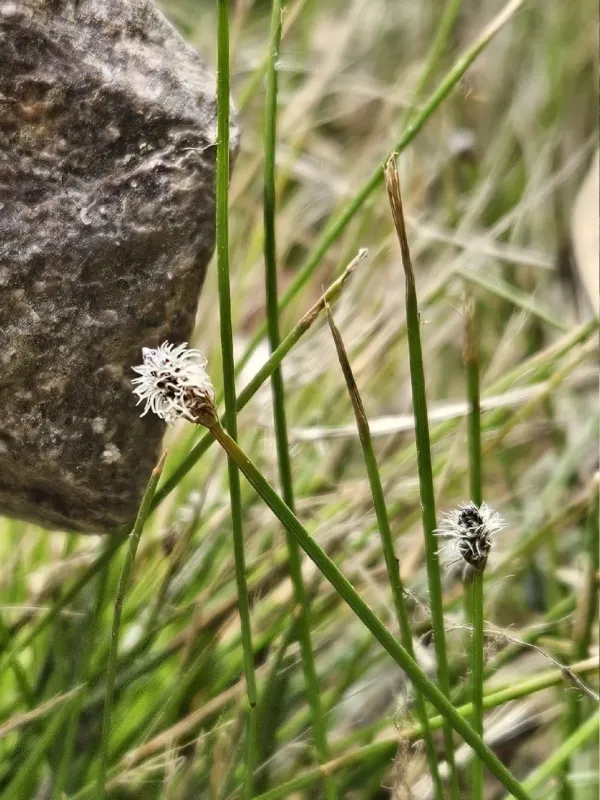
The plant is characterized by its tufted growth habit, producing thin, upright, deep green stems that can grow up to 60 cm in height. These stems are photosynthetic and emerge from robust underground rhizomes, which allow the plant to spread rapidly under favorable soil conditions.
Cultivation requires saturated soils or shallow water environments. Sand spikerush thrives in sunny locations with high moisture availability. It is highly tolerant of varying soil types, provided that the substrate remains consistently damp or muddy throughout the growing season.
Regarding climate, the plant prefers warm to temperate zones. While it can withstand occasional dry spells if the soil remains wet, it performs best when the root zone is submerged or kept in a bog-like state, avoiding the extremes of rapid dehydration that can stress the plants.
In landscaping and agriculture, sand spikerush is primarily used for shore stabilization and water quality improvement. Its dense root system helps prevent soil erosion along pond banks, while its dense foliage helps filter pollutants, making it a valuable asset for constructed wetlands and water purification systems.
Main diseases and pests
Eleocharis montevidensis is generally resistant to most common plant diseases. Issues are usually confined to cases where stagnant, low-quality water promotes the growth of filamentous algae or fungal pathogens that can settle on the stem bases, especially in over-dense stands.
Pests are rarely a significant problem for this species. Its high silica content makes the stems unpalatable to many insects. Maintenance of clear, circulating water is the best cultural practice to prevent potential issues and ensure the longevity of the plant population.