
Eleocharis minuta
Eleocharis minuta
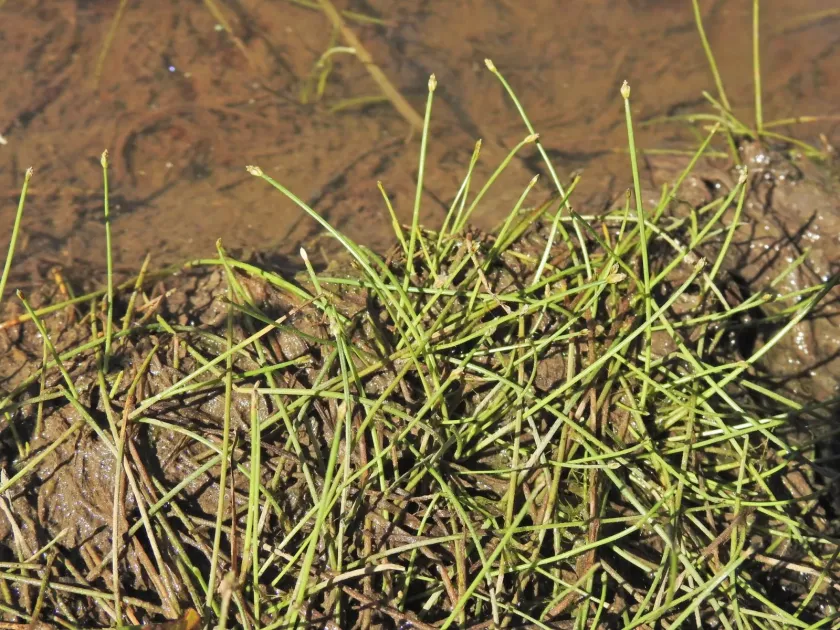
Description
Sowing dates
Eleocharis minuta is a perennial monocot that thrives in marshy environments and is primarily propagated through vegetative division of its rhizomes. Spring is the optimal time for establishing new colonies when temperatures are consistently warm.
Planting involves small clumps distributed evenly across the substrate. Ensuring each clump has healthy rhizomes is critical for successful establishment and subsequent spreading across the available space.
During the initial phase, maintaining a consistent water level just covering the base of the plant is vital. Once the root system is established, the plant begins to spread horizontally, forming a dense, grassy carpet.
Spacing between plants should be adjusted based on the desired density of the final coverage. Closer planting significantly reduces the time needed for the plant to cover the entire area through vegetative runner growth.
Routine monitoring after sowing helps to identify areas where the plant may struggle, allowing for the addition of necessary micronutrients or corrective adjustments to the light exposure to ensure uniform growth.
Growing requirements
As a member of the Cyperaceae family, Eleocharis minuta is highly adapted to aquatic or semi-aquatic habitats. It requires a fine-grained, nutrient-rich substrate that provides enough support for its delicate root system without becoming anaerobic.
Temperature requirements for optimal growth range between 15°C and 25°C. Exposure to extreme fluctuations can stress the plant, leading to stunted development or reduced vigor in its characteristic bright green stems.
Light is a primary driver of the plant's morphology. It demands high levels of illumination to maintain its compact, needle-like structure; otherwise, the stems will stretch and lose their aesthetic value.
Water quality parameters, including moderate hardness and sufficient CO2 levels, are essential for robust health. The plant performs best in water that is clean and free from excessive suspended organic debris.
Regular fertilization with iron-rich supplements is highly recommended to maintain the vibrant color of the foliage and support the continuous development of new runners throughout the growing season.
Main diseases and pests
The primary threats to Eleocharis minuta include infestation by various filamentous algae, which compete for light and nutrients. Keeping the plant in a clean environment and controlling nutrient balance is the best preventative measure.
Fungal infections can occur if the plant bed becomes too dense and lacks adequate water circulation. This often happens if the culture is not regularly thinned, leading to the accumulation of dead plant matter at the base.
Pests such as small aquatic snails or crustaceans can sometimes damage the delicate stems. Monitoring and manual removal or biological controls are often used to keep these populations in check within closed systems.
Nutrient deficiencies, particularly iron or nitrogen deficiency, manifest as yellowing of the stems (chlorosis). Prompt identification and treatment with specialized aquatic fertilizers can usually rectify these issues.
Root rot is a major risk if the substrate becomes compacted and lacks oxygen. Using a coarse, porous sand as a base layer can help maintain root health and prevent the development of harmful anaerobic bacteria.
Harvesting
Harvesting for the purpose of propagation involves dividing the existing rhizomatous mats. Using sterile, sharp tools ensures that the remaining plant tissue is not damaged, facilitating quick recovery after the harvest.
Trimming the foliage is a common management practice to maintain the desired height of the plant carpet. Frequent, light trims are more beneficial than infrequent heavy cuts, as they reduce plant stress.
The harvested plant material should be kept in a moist, cool environment if it is not to be planted immediately. Proper handling ensures that the rhizomes remain viable for future transplanting tasks.
In large-scale aquatic nurseries, the harvesting process must be coordinated to ensure constant turnover of plant stock. This involves selective removal of the oldest parts of the mat to refresh the growth substrate.
Always dispose of surplus plant biomass responsibly to prevent it from entering local water bodies, as even small fragments can potentially regrow and become invasive in non-native environments.