
Little spikerush
Eleocharis minima
Description
Growing requirements
Little spikerush (Eleocharis minima) is a member of the Cyperaceae family. It is a perennial herbaceous plant native to the tropical and subtropical regions of the Americas, thriving in wetlands and damp environments.
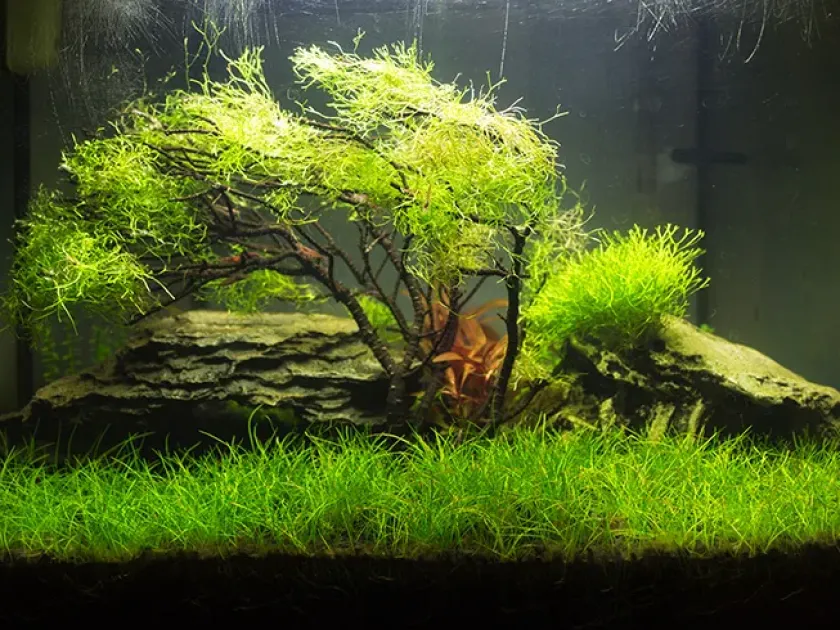
The plant is characterized by its miniature size and delicate, needle-like stems that form dense, lush green mats. Its creeping rhizomes allow it to spread rapidly across moist surfaces, creating a carpet effect that is highly prized in horticulture.
The climate requirements for Eleocharis minima center on high humidity and sufficient light. It is an undemanding species in terms of temperature, but it requires bright conditions to maintain its structural integrity and prevent etiolation.
Soil requirements involve a substrate that is consistently moist or submerged. In cultivation, it performs best in nutrient-rich, loose, and slightly acidic media that allows for easy root penetration and expansion of the rhizome system.
This crop is primarily used in the decorative sector, specifically within the aquascaping hobby and indoor landscaping. It serves as a classic foreground plant that mimics natural grassy landscapes in submerged or paludarium settings.
Main diseases and pests
The primary threats to Eleocharis minima include various fungal pathogens that flourish in poor water circulation or stagnant soil conditions. These diseases often manifest as browning and wilting of the stems.
Pest pressure is mainly exerted by herbivorous gastropods, such as snails, which find the soft, young shoots of the plant an easy food source. Keeping populations of these pests under control is essential for plant health.
Algal overgrowth presents a significant management challenge. If nutrient levels become unbalanced or lighting is too intense, algae can quickly outcompete the spikerush, smothering its growth and reducing light availability.
Cultural control involves routine maintenance, including trimming and the removal of dying tissue to ensure adequate aeration around the crown and roots of the plant.
Preventative care is highly effective; by ensuring high water quality and optimal nutrient levels, the risk of disease and pest infestation is minimized significantly for this delicate species.