
Knotted spikerush
Eleocharis interstincta
Description
Growing requirements
Knotted spikerush (Eleocharis interstincta) is a perennial aquatic plant belonging to the Cyperaceae family. It is native to the tropical and subtropical regions of the Americas, where it thrives in wetlands and shallow water bodies.
This species is highly adapted to aquatic conditions, requiring saturated soil and constant water coverage. It is typically found in marshes, ponds, and the edges of lakes where light penetration is high.
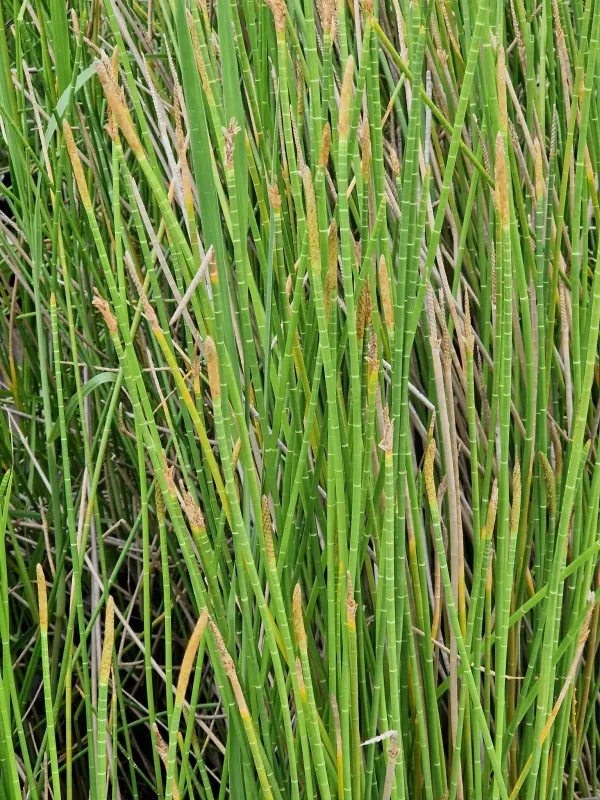
Botanically, the plant is characterized by stiff, erect, hollow stems that lack functional leaves. It forms dense colonies through a robust rhizome system, which is essential for stabilizing muddy substrates.
For cultivation, the plant requires mineral-rich, silty soils with a pH ranging from neutral to slightly acidic. It is sensitive to water salinity and prefers stable, calm water environments.
In modern agriculture, this plant is increasingly valued for its role in phytoremediation, as it efficiently absorbs nitrogen and phosphorus from agricultural runoff, thus protecting water quality.
Main diseases and pests
The primary threats to Eleocharis interstincta include fungal infections that target the stem, often exacerbated by stagnant water and poor water circulation.
Herbivorous insects, such as stem-boring larvae, represent a significant risk by compromising the structural integrity of the stems and slowing growth rates.
Overgrowth of filamentous algae and invasive macrophytes can choke the plants, creating intense competition for sunlight and essential nutrients.
Poor water quality, particularly the accumulation of heavy metals or pollutants beyond the plant's tolerance levels, can lead to systemic toxicity and decay.
Effective management includes monitoring stem health and ensuring proper spacing to allow water flow between individual stalks, reducing the risk of fungal spread.