
Yellow spikerush
Eleocharis flavescens
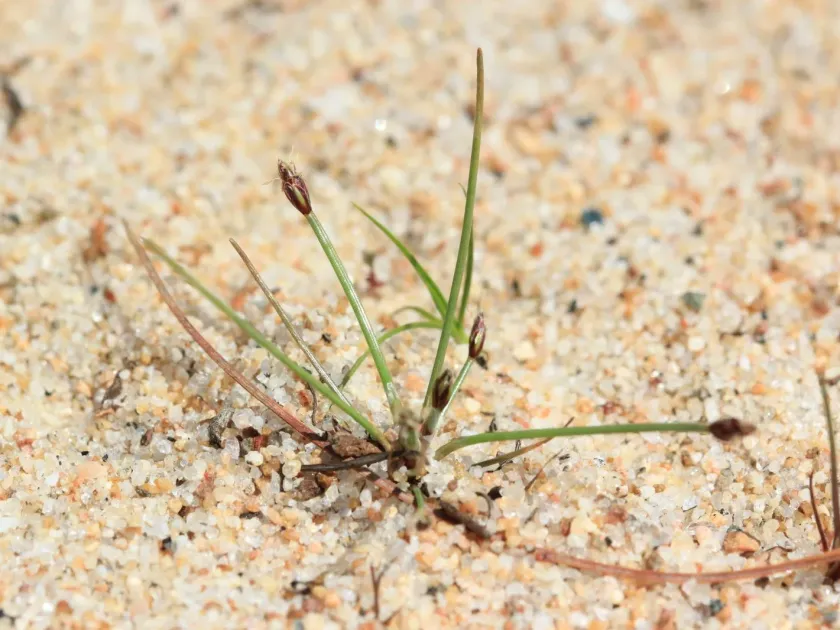
Description
Sowing dates
Yellow spikerush (Eleocharis flavescens) is a perennial sedge that effectively propagates through both seed dispersal and rhizome expansion in natural aquatic environments.
In a controlled cultivation setting, sowing seeds is best performed during the early spring when water and soil temperatures stabilize for germination.
For more reliable crop establishment, division of mature rhizomes is the preferred method, performed during the dormant phase to ensure robust growth.
Planting density should be carefully managed, as the species has a strong spreading habit that can quickly occupy available aquatic space.
Ensuring that rhizomes are firmly anchored in the substrate during the initial planting phase is critical to prevent displacement by water movement.
Growing requirements
As a member of the Cyperaceae family, this species requires consistently moist conditions, thriving in wetlands, marshes, or shallow standing water.
It prefers high-light environments and thrives in silty or sandy soils that provide adequate nutrients for its vigorous growth.
The plant demonstrates a remarkable tolerance to water level fluctuations, provided the substrate does not completely dry out for extended periods.
Optimal pH levels for growth are generally in the acidic to neutral range, consistent with typical boggy or riparian soil compositions.
While native to warmer climates, it can adapt to moderate summer conditions, making it a versatile species for various water-based landscape projects.
Yield
The primary economic value of yellow spikerush lies in its capacity for biomass production, often utilized for site stabilization and phytoremediation.
Yields are dictated by nutrient availability in the aquatic environment and the duration of the favorable thermal growing season.
While not a major commercial fodder crop, it provides essential food for diverse waterfowl species and supports aquatic biodiversity.
Biomass productivity can be significant in nutrient-rich wetlands, where the plant forms dense mats that prevent soil erosion along shorelines.
Ongoing research continues to evaluate the potential of this species as a source of organic mulch for sustainable gardening practices.
Main diseases and pests
Yellow spikerush is known for its high level of hardiness and resistance to common agricultural pathogens that affect terrestrial crops.
Pest pressures are generally minimal, though certain aquatic insects may feed on its stems during periods of peak vegetative growth.
Fungal issues are rare and are usually indicative of poor water quality or excessive stagnation that undermines the plant's health.
Effective management includes monitoring for invasive species that might compete for nutrients and light within the wetland ecosystem.
Maintaining a flow of water through managed sites helps prevent the accumulation of toxins that could weaken the plant's natural immune system.
Harvesting
Harvesting strategies involve the use of amphibious equipment designed to operate in shallow, saturated areas without damaging the delicate base soil.
The timing of the harvest is critical; it is typically conducted during peak vegetative growth before the stems lignify and lose nutritional value.
Post-harvest management involves processing the biomass for composting or as an erosion control material, depending on local agricultural needs.
Sustainable harvesting requires leaving sufficient rootstock undisturbed to facilitate natural regeneration and prevent long-term population decline.
After collection, the material should be allowed to drain properly if it is intended for use in organic waste management or as agricultural bedding.