
Eleocharis fistulosa
Eleocharis fistulosa
Description
Growing requirements
Eleocharis fistulosa is a perennial aquatic plant belonging to the Cyperaceae family. It is widely distributed across tropical and subtropical regions, typically inhabiting shallow wetlands, marshes, and the margins of slow-moving or stagnant water bodies.
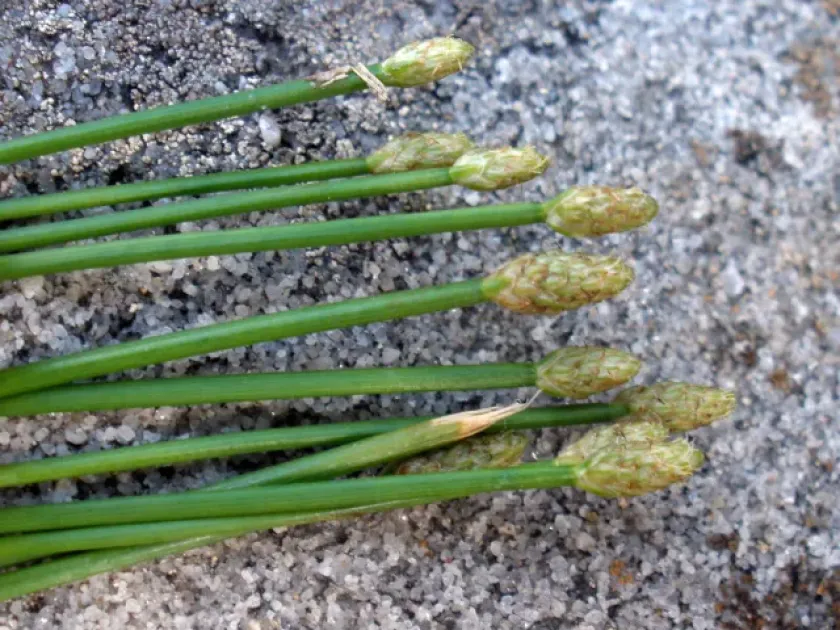
Botanically, it is characterized by hollow, tubular stems and a rhizomatous root system. This plant is a specialist in hydrophytic environments, meaning it is evolutionary adapted to thrive where soils are saturated or submerged for most of the year.
Cultivation requirements necessitate consistently wet, nutrient-rich, and slightly acidic soils. The plant thrives in full sun, which is critical for maximizing its metabolic activity and vegetative expansion within artificial or natural wetland environments.
Standard agronomic management focuses on maintaining a precise water level. The plant does not tolerate drought conditions and requires a stable aquatic environment to prevent the desiccation of its root structures and subsequent plant death.
Economically, Eleocharis fistulosa is valued in ecological engineering, specifically for phytoremediation and improving water quality in controlled wetlands. Its ability to process nutrients and heavy metals makes it a functional tool for environmental management.
Main diseases and pests
Significant threats to plant health include fungal outbreaks favored by low water circulation and excessive organic buildup in the substrate. Furthermore, insects that bore into the hollow stems can cause structural collapse and reduce the overall vigor of the plant stand.