
Eleocharis dombeyana
Eleocharis dombeyana
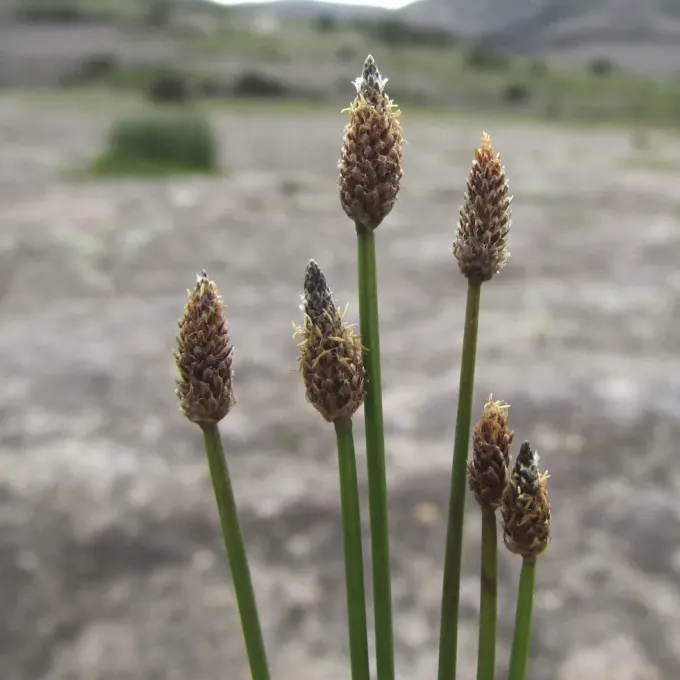
Description
Growing requirements
Eleocharis dombeyana, commonly known as a type of spikerush, belongs to the Cyperaceae family. It is a perennial herbaceous plant specifically adapted to saturated soil environments, including floodplains and marshes.
Botanically, the species is characterized by its slender, cylindrical stems and a robust rhizomatous root system. This morphology allows the plant to efficiently propagate vegetatively, establishing dense colonies in favorable aquatic habitats.
Environmental requirements for this plant are centered on moisture availability. It thrives in soils that remain consistently damp or partially submerged, preferring neutral to slightly acidic soil chemistry.
Climate adaptability is inherent to the regions of South America, where it naturally occurs. The plant responds well to temperate and subtropical conditions with adequate rainfall throughout the growing season.
Proper soil management for this crop involves ensuring that nutrient availability, particularly nitrogen and phosphorus, is maintained to support rapid vegetative growth in wetland conditions.
Harvesting
The agricultural utility of Eleocharis dombeyana is primarily focused on forage production in low-lying areas where conventional crops may struggle due to waterlogging. It provides a reliable source of biomass in specific ecological niches.
Harvesting strategies are timed during the active growth phase. To maximize nutritional quality, the biomass must be harvested before the stems become overly lignified, which happens as the plant reaches its reproductive stage.
Post-harvest handling is critical because the high moisture content of the tissue necessitates efficient drying techniques to prevent fungal contamination and degradation during storage.
In addition to its role as fodder, the plant is valued for soil conservation. Its dense root network is highly effective at stabilizing riverbanks and preventing erosion in flood-prone agricultural zones.
Sustainable use of this species contributes to the efficient management of wetland resources, turning otherwise marginal lands into productive areas within an integrated agricultural system.