
Eleocharis confervoides
Eleocharis confervoides
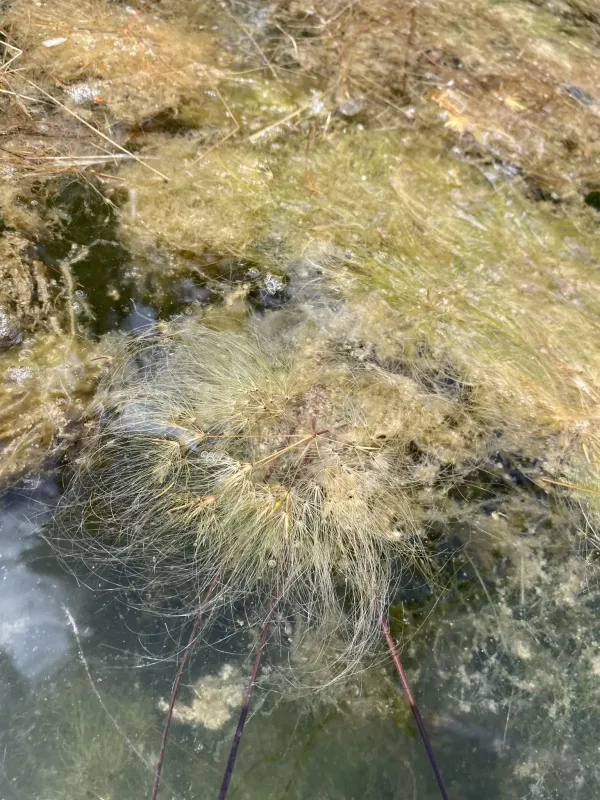
Description
Growing requirements
Eleocharis confervoides is a distinctive aquatic plant belonging to the Cyperaceae family. It is typically found in shallow tropical and subtropical wetlands, where it forms dense submerged mats that play a vital role in the local ecosystem.
The species requires stable aquatic environments to thrive. Its primary habitat includes slow-moving waters or stagnant pools with soft, nutrient-rich bottom sediments. It is highly sensitive to water chemistry, preferring slightly acidic to neutral environments.
Climatic requirements are strictly related to tropical conditions. The plant demands high light intensity to support its metabolic processes, especially when fully submerged. Temperatures ranging from 22°C to 28°C are considered optimal for vegetative growth.
In terms of soil or substrate, Eleocharis confervoides performs best in fine-grained mud or sand enriched with organic detritus. The roots are relatively delicate, so excessive mechanical disturbance of the substrate should be avoided during the establishment phase.
Agronomic management requires careful regulation of water depth and quality. It is crucial to prevent the accumulation of excess algae or filamentous weeds that could compete for light and nutrients, effectively smothering the crop.
Harvesting
The economic utility of Eleocharis confervoides lies primarily in its application as a phytoremediation tool. It is utilized in artificial wetlands to extract excess nutrients from wastewater, contributing to improved water quality.
Harvesting strategies involve thinning the populations to maintain optimal density and prevent the decay of submerged biomass. Mechanical removal should be performed with caution to avoid uprooting the entire colony, allowing for natural regeneration.
The harvested biomass is rich in essential nutrients and can be effectively converted into high-quality organic compost. This recycling of nutrients makes it a sustainable practice within integrated water management systems.
Post-harvest handling involves draining excess moisture immediately, as the plant tissue is highly succulent and prone to rapid decomposition if left in heaps without proper aeration.
Regular maintenance cycles depend on the growth rate, which is highest during peak summer months. Frequent monitoring of stem density helps determine the precise timing for intervention to ensure the long-term health of the planting site.