
Gulf Coast spikerush
Eleocharis cellulosa
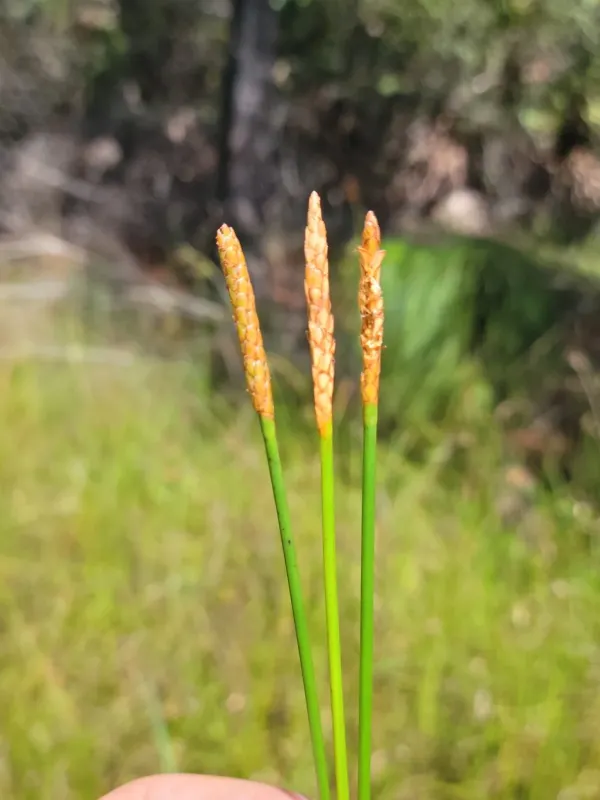
Description
Growing requirements
Gulf Coast spikerush (Eleocharis cellulosa) is a perennial herbaceous plant belonging to the Sedge family (Cyperaceae). It is native to tropical and subtropical regions of the Americas, thriving in diverse wetland habitats.
The plant grows optimally in saturated soils, shallow marshes, and coastal wetlands. It is well-adapted to environments with standing water, exhibiting high tolerance for both fresh and brackish conditions.
Soil requirements typically involve silty, sandy, or organic substrates that provide high moisture retention. It thrives in locations with full sunlight, which is necessary for the vigorous development of its stems.
Climatic preferences include stable, warm temperatures typically ranging between 20°C and 30°C. The species is highly sensitive to prolonged drought, which can significantly damage its root structure.
Cultivation requires careful management of the water level to ensure the plants remain hydrated throughout the growing season, while preventing total submersion of new, young shoots.
Main diseases and pests
The species generally exhibits high resistance to common agricultural pathogens, as its aquatic environment creates a unique barrier to many land-based fungi and bacteria.
Potential threats include herbivory by aquatic insects and specific mollusk species that can consume the stems, particularly during the early stages of plant establishment.
Disease outbreaks are rare but can occur when the hydrological balance is disrupted, leading to plant stress and increased susceptibility to opportunistic pathogens.
Integrated pest management in these systems focuses on maintaining high water quality and ensuring that native biodiversity is balanced to prevent insect population spikes.
Careful monitoring is essential to ensure that the plants are not overtaken by invasive aquatic species that can compete for sunlight and nutrients in the same habitat.
Harvesting
Gulf Coast spikerush has significant utility in wetland restoration projects and as a tool for phytoremediation, where it helps filter heavy metals and excess nutrients from water.
In agricultural settings, it can be harvested to produce organic mulch or biomass, contributing to soil fertility enhancement when used in composting systems.
Harvesting is usually conducted using amphibious machinery capable of maneuvering in shallow water environments, ensuring minimal disturbance to the substrate.
The collected biomass is typically dried to manage its high water content, making it suitable for animal bedding or as a carbon source for composting programs.
Productivity is largely dictated by the nutrient availability in the water and the length of the growing period, which supports frequent biomass replenishment.