
Matabele saffronwood
Elaeodendron matabelicum
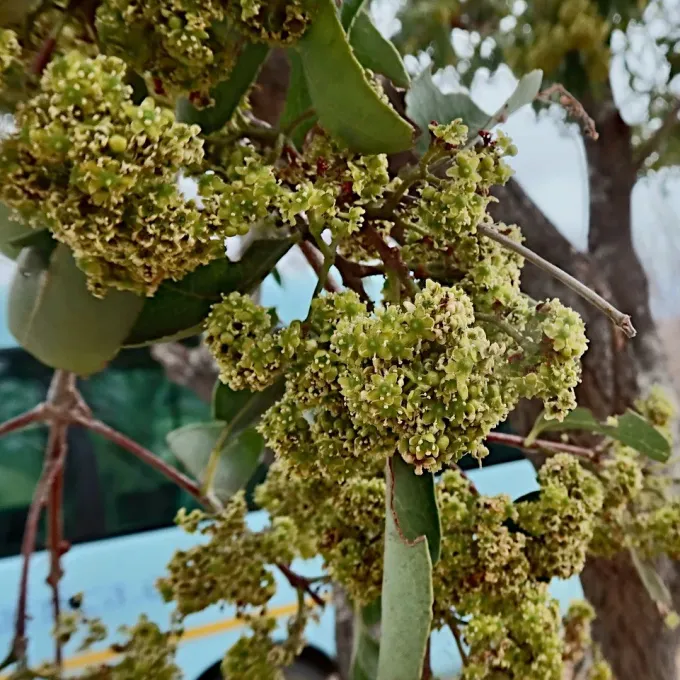
Description
Growing requirements
Matabele saffronwood (Elaeodendron matabelicum) is a resilient tree species belonging to the Celastraceae family. It is native to the savanna and dry woodland biomes of Southern Africa, reflecting its evolved ability to cope with extreme environmental stressors.
The plant thrives in regions with intense solar radiation. When cultivated, it requires full sun exposure to maintain its characteristic growth habit and to promote the development of its dense, woody structure.
Soil requirements focus primarily on drainage. The species cannot tolerate waterlogged conditions, which lead to root rot; therefore, light, sandy soils or well-structured loams are considered optimal for its survival.
Temperature tolerance is moderate. While the tree can withstand high heat without significant damage, it requires protection from severe frost, which can kill young trees and damage the foliage of mature specimens.
Basic maintenance includes minimal irrigation once the tree is established. The species is highly drought-tolerant, utilizing its physiological mechanisms to conserve moisture effectively during the dry season.
Yield
The economic utility of Matabele saffronwood is largely derived from its hard, durable timber, which is highly valued for woodworking and small-scale crafting due to its unique density and grain quality.
In landscape architecture, the tree is prized for its ornamental value. It is often used in Xeriscaping, providing shade and structural integrity to gardens that aim to minimize water consumption while maintaining lush appearances.
Ecologically, the tree plays a vital role in its native habitat by providing food resources for birds and mammals, who consume its fruit and distribute the seeds throughout the ecosystem.
There is ongoing interest in the chemical compounds found within the bark and leaves of the tree, which are used in traditional local practices, though scientific pharmacological exploration remains limited.
Strategic planting of Elaeodendron matabelicum in arid zones contributes significantly to soil stabilization and the prevention of erosion, highlighting its importance in forestry management and sustainable land use.