
Elaeodendron buchananii
Elaeodendron buchananii
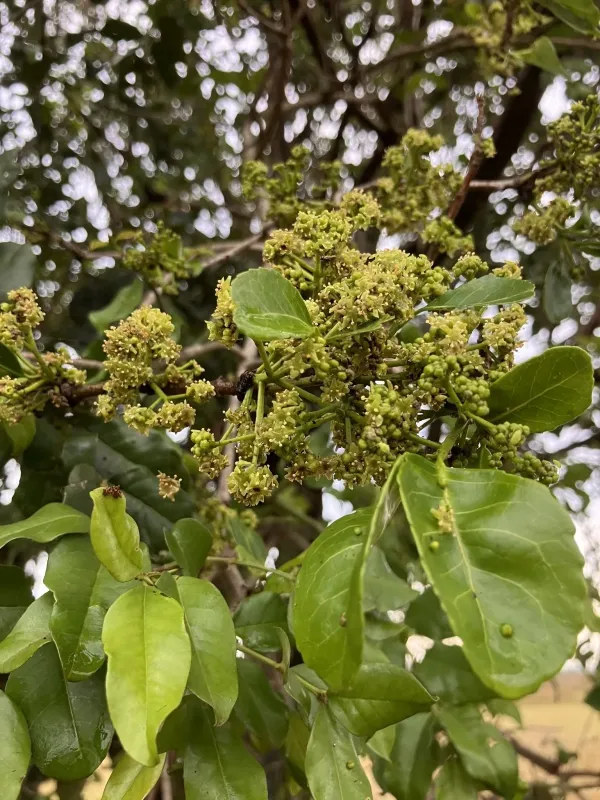
Description
Growing requirements
Elaeodendron buchananii is a prominent species within the Celastraceae family. Native to the tropical regions of Africa, this evergreen tree plays a vital role in local biodiversity and forest structure, often found in mountain forests and gallery ecosystems.
The tree thrives in tropical climates characterized by consistent temperatures and high humidity levels. It is not tolerant of frost, making its cultivation restricted to regions where environmental conditions remain stable throughout the entire year without extreme thermal stress.
Soil requirements for this species include deep, well-draining substrates that are rich in organic matter. While the tree shows some adaptability to different soil textures, it performs best in loamy, nutrient-dense environments that allow for healthy root development.
Regarding light, the species is generally shade-tolerant during its seedling and sapling stages. As the tree matures, it moves into the canopy layer, where it benefits from increased sunlight exposure, which is necessary for the continuous development of its dense crown.
Proper agricultural maintenance involves managing competition from invasive species in the early years of establishment. Additionally, mulching around the base can help maintain soil moisture, which is critical for growth in areas with seasonal precipitation fluctuations.
Harvesting
The economic value of Elaeodendron buchananii is primarily derived from its high-quality timber. The wood is recognized for its durability, hardness, and resistance to decay, making it a highly desirable raw material for furniture making, joinery, and artisanal woodcrafts.
Harvesting practices must adhere to sustainable forestry guidelines to ensure the long-term viability of the species. Selective logging is recommended over clear-cutting, ensuring that only mature trees meeting specific size and health criteria are extracted from the stands.