
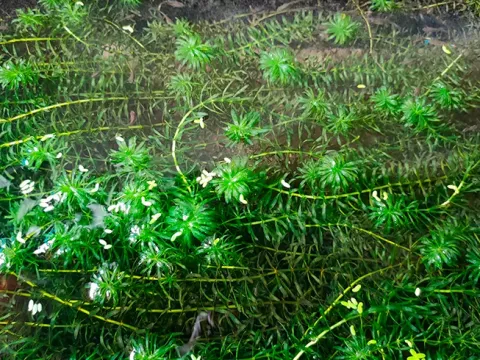
Egeria
Egeria
Egeria, specifically the species Egeria densa, belongs to the Hydrocharitaceae family. This aquatic macrophyte originates from the warm waters of South America, specifically Brazil, Argentina, and Uruguay.
What the section contains

Egeria
The plant thrives in water temperatures ranging from 15 to 24 degrees Celsius. It is highly sensitive to rapid thermal fluctuations, which often cause the stems to become brittle and shed their dense whorls of leaves.
High light intensity is essential for the healthy growth of Egeria. In artificial cultivation, it requires at least 10 to 12 hours of light daily to prevent leggy growth and maintain its vibrant green coloration.
Egeria is characterized by its ability to absorb nutrients directly from the water column through its foliage. Therefore, it does not rely heavily on the substrate, making it a perfect plant for beginners or floating setups.
Water chemistry should be kept within a neutral to slightly alkaline pH range. Regular water changes are recommended to ensure the plant has access to sufficient carbon dioxide and trace minerals for its rapid growth cycle.
The most common threat to Egeria is the infestation of epiphytic algae. When conditions favor algal growth, they rapidly cover the leaves of the Egeria, preventing photosynthesis and eventually causing plant decay.
Pests such as snails can cause physical damage to the soft, succulent stems. High populations of certain snail species can turn a healthy Egeria cluster into bare stems within a short period.
Bacterial decomposition often occurs if the plant is subjected to stagnant water conditions or extreme temperature spikes. This condition is characterized by a slimy texture on the stem tissue.
Egeria is extremely sensitive to heavy metals, particularly copper. Exposure to common anti-parasitic treatments for fish containing copper will lead to the irreversible collapse of the plant.
In many parts of the world, Egeria densa is classified as an invasive species. Its incredible vegetative growth rate allows it to dominate freshwater ecosystems, often leading to the exclusion of native aquatic flora.