
Egeria naias
Egeria naias
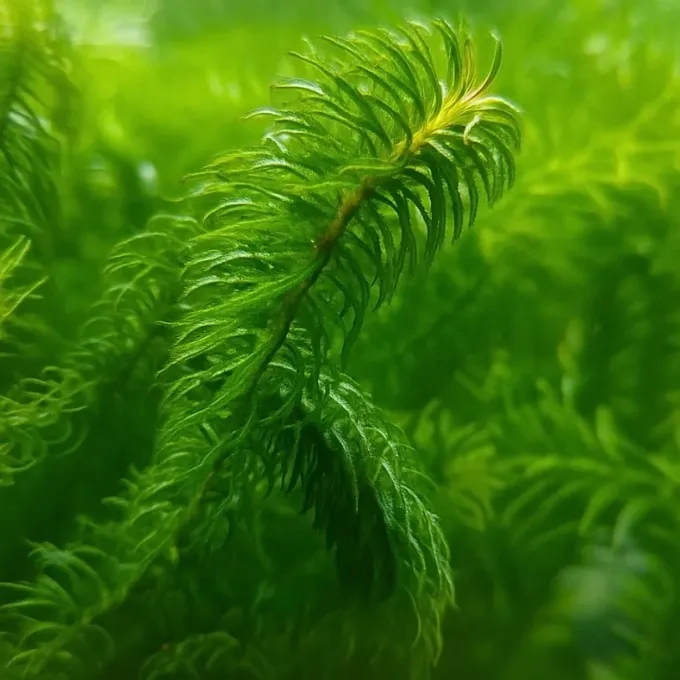
Description
Growing requirements
Egeria naias is a perennial submerged aquatic plant belonging to the Hydrocharitaceae family. It is native to the freshwater ecosystems of South America, naturally occurring in rivers and streams throughout Brazil, Paraguay, and Argentina.
The plant is characterized by an elongated stem that can reach significant lengths in favorable environments. Its leaves grow in dense whorls, providing a much bushier and more refined appearance compared to its relative, Egeria densa.
To successfully cultivate this species, it requires stable water temperatures ranging from 20 to 26 degrees Celsius. High-intensity lighting is essential; without sufficient light, the stems tend to stretch excessively and lose their vibrant coloration.
The culture thrives best in soft to medium-hard water with efficient filtration. Because it absorbs nutrients primarily through its leaves, supplemental CO2 injection significantly boosts growth rates and helps maintain lush, healthy foliage.
The primary use of Egeria naias is in the aquarium industry. It serves as a popular background plant, providing an excellent environment for fish spawning and acting as a biological agent to help remove nitrates from the water column.
Main diseases and pests
The most significant threat to the health of the plant is algal infestation, which occurs when lighting and nutrient levels are imbalanced. Filamentous or blue-green algae can quickly overwhelm the delicate structure of the plant.
Egeria naias is highly sensitive to rapid fluctuations in water chemistry, especially sudden changes in pH levels. Under improper conditions, the lower sections of the stems often lose their leaves, leading to sparse and unhealthy growth patterns.