
Dracaena steudneri
Dracaena steudneri Schweinf. ex Engl.
Description
Growing requirements
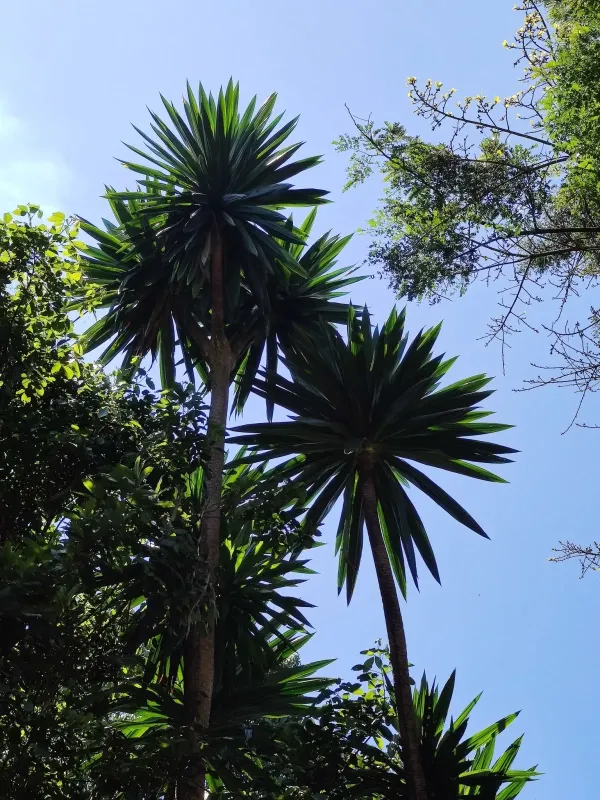
Dracaena steudneri is a prominent member of the Asparagaceae family. This species is characterized by its significant height, sometimes reaching up to 15 meters in its native African habitat, where it serves as a structural component of the forest canopy.
Originating from the tropical regions of East and Central Africa, this plant thrives in mountain forests. Its ecological niche is defined by high humidity and stable climatic conditions found at altitudes ranging from 600 to 2200 meters above sea level.
For successful growth, Dracaena steudneri requires well-drained, nutrient-rich soil. The root system is highly sensitive to waterlogging; therefore, the potting mix must provide excellent aeration to prevent oxygen deprivation and fungal infections.
This species performs best in bright, indirect light. While it can adapt to lower light levels, excessive exposure to direct tropical sun can damage the foliage. Proper light management is crucial for maintaining the plant's vibrant green leaf color.
Commercially, it is utilized in large-scale interior landscaping and tropical park design. Its architectural form makes it a preferred choice for adding vertical interest to botanical gardens and high-ceilinged public spaces.
Main diseases and pests
In cultivated environments, the plant is susceptible to common greenhouse pests such as spider mites and mealybugs. Regular cleaning of the leaves and the application of neem oil or systemic insecticides are effective measures to maintain plant health.
Root rot, caused by overwatering, is the most common physiological disorder. If the soil remains consistently damp, the roots lose their function, which quickly leads to leaf yellowing and stem degradation, necessitating immediate corrective action.