
Fragrant dracaena
Dracaena fragrans (L.) Ker Gawl.
Description
Growing requirements
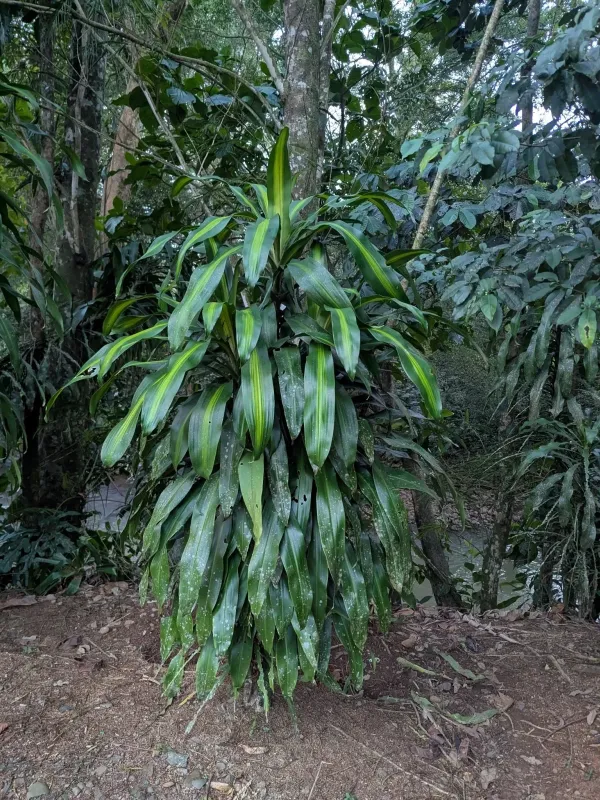
Fragrant dracaena (Dracaena fragrans) is a woody-stemmed perennial shrub belonging to the Asparagaceae family. Native to tropical Africa, this species thrives in forest understories, which dictates its preference for filtered light and humid conditions.
The plant is characterized by its sword-shaped, leathery foliage that can reach significant lengths. In horticultural practice, it is widely utilized for its air-purifying properties and its aesthetic appeal as a foliage plant in interior landscapes and commercial settings.
Optimal growth requires a stable environment with temperatures between 18°C and 25°C. While the plant can tolerate lower light conditions, variegated varieties require bright, indirect light to maintain their distinct color patterns and prevent etiolation.
The soil medium must be well-structured and highly porous. A mixture of peat, perlite, and pine bark is recommended to ensure proper drainage, as Dracaena fragrans is highly susceptible to root rot if left in waterlogged conditions.
Watering management is critical; the substrate should be allowed to dry slightly between irrigation cycles. Overwatering is the most common cause of crop loss, as it leads to root asphyxiation and the development of opportunistic pathogens.
Main diseases and pests
Common pests attacking the fragrant dracaena include spider mites, scale insects, and mealybugs. These pests exploit the plant's vascular system, leading to stunted development and leaf chlorosis.
Fungal leaf spot diseases, typically caused by species like Alternaria or Phyllosticta, are prevalent in environments with poor air circulation. These infections manifest as necrotic lesions surrounded by yellow halos.
Root rot, associated with various Pythium or Phytophthora species, remains the most devastating threat to commercial production. It is largely preventable through rigorous irrigation control and the use of sterile growing media.
Integrated pest management (IPM) protocols involve monitoring populations and using horticultural oils or systemic insecticides when infestation thresholds are exceeded. Biological controls are increasingly favored in indoor production.
Maintaining proper hygiene by removing dead foliage and cleaning surfaces helps to reduce the inoculum pressure of fungal pathogens, ensuring the health and marketability of the crop.