
Dorycnium herbaceum
Dorycnium herbaceum
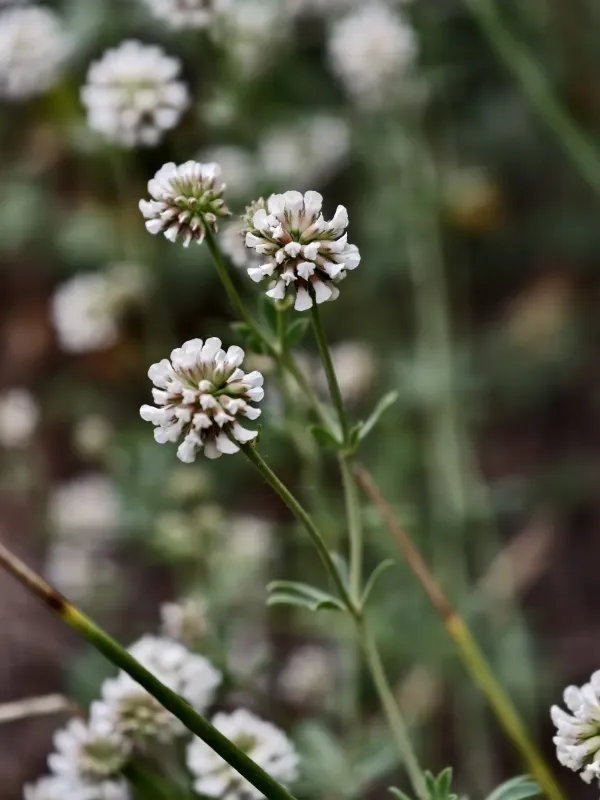
Description
Sowing dates
Dorycnium herbaceum is a perennial legume highly valued for its adaptability in dry and semi-arid agricultural landscapes.
Sowing should take place in early spring when soil temperatures reach 8-10 degrees Celsius. Pre-sowing seed scarification is highly recommended to improve germination rates.
Seeds should be planted at a shallow depth of 1.5 to 2 centimeters to ensure strong seedling emergence and prevent exhaustion of energy reserves.
As the plant has a slow initial growth rate, weed management during the establishment phase is essential for successful stand development.
A seeding rate of 10-12 kg per hectare is standard for row cultivation, providing enough density to suppress weeds while allowing root development.
Growing requirements
This crop is a classic xerophyte, demonstrating exceptional drought resistance, making it suitable for regions with limited rainfall.
It performs best on well-drained calcareous, loamy, or rocky soils, showcasing its ability to survive in challenging environments.
The plant prefers neutral to slightly alkaline soil pH levels. Excessive acidity may inhibit the symbiotic activity of nitrogen-fixing bacteria.
Dorycnium herbaceum is highly light-demanding. It should not be planted in shaded areas or as an understory crop, as this significantly reduces productivity.
It shows excellent winter hardiness, surviving cold winters and maintaining viability for multiple seasons in temperate climates.
Yield
Green biomass yields vary between 15 and 25 tons per hectare, depending on soil quality and the age of the perennial stand.
Hay production reaches approximately 4-6 tons per hectare, offering high protein content, which is beneficial for livestock nutrition.
Productivity typically peaks between the second and third year as the plant establishes its deep and extensive root system.
The plant demonstrates excellent regrowth capabilities after grazing or harvesting, making it a reliable choice for long-term pasture management.
Seed yields can reach up to 400 kg per hectare, allowing farmers to maintain their own seed stocks for future planting seasons.
Main diseases and pests
Rust and leaf spot diseases are the primary threats, particularly in humid conditions or during periods of excessive rainfall.
Insect pests, such as weevils, may affect early growth stages by feeding on young leaves and developing buds.
Implementing crop rotation and avoiding over-dense planting are essential strategies for mitigating disease pressure.
Root rot can occur in waterlogged soils, which is why ensuring good drainage is a critical preventive measure for crop health.
Biological treatments for seeds and integrated pest management practices are usually sufficient to maintain healthy crops without heavy chemical use.
Harvesting
Harvesting for hay should occur during the flowering stage to maximize the nutritional value of the biomass.
Care should be taken during the curing process to prevent leaf shattering, which significantly decreases the overall quality of the fodder.
Mowing height should be maintained at 7-10 cm above the ground to promote quick regrowth and ensure the plant remains vigorous.
For seed production, harvesting is performed when pods turn brown, using combines adapted for light legumes to minimize seed loss.
Proper storage in well-ventilated dry conditions is necessary to prevent spoilage and maintain high palatability for livestock.