
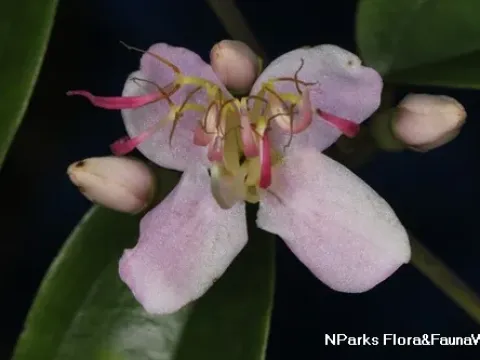
Dissochaeta
Dissochaeta
Dissochaeta is a genus of woody climbers belonging to the Melastomataceae family, known for their specific adaptation to tropical forest environments. These plants thrive in conditions characterized by high atmospheric humidity and relatively consistent temperatures throughout the year, which are essential for their metabolic processes.
What the section contains

Dissochaeta
The native distribution of these plants covers Southeast Asia, stretching across regions like Indonesia, Malaysia, and the Philippines. In the wild, they occupy niches along forest margins and riverbanks, where they utilize their climbing habits to emerge from the dense understory to reach brighter canopy levels.
Botanically, the genus is easily identified by its distinctive leaf venation pattern, consisting of several prominent longitudinal veins. The stems exhibit climbing mechanisms that allow the plant to secure itself onto tree trunks, facilitating vertical growth that is typical for competitive tropical flora.
Environmental requirements for Dissochaeta involve well-draining, humus-rich soil substrates that mimic the nutrient-dense forest floor litter. Successful cultivation requires avoiding waterlogging, as the roots are sensitive to hypoxia, and providing adequate space for the sprawling vegetative growth of the vines.
Regarding its utility, Dissochaeta is primarily kept in botanical collections and is of interest for its evolutionary biology and chemical properties. While not a commercial crop in the traditional agricultural sense, it remains a valuable member of the tropical ecosystem, playing an essential role in forest structural diversity.