
Discocactus placentiformis
Discocactus placentiformis
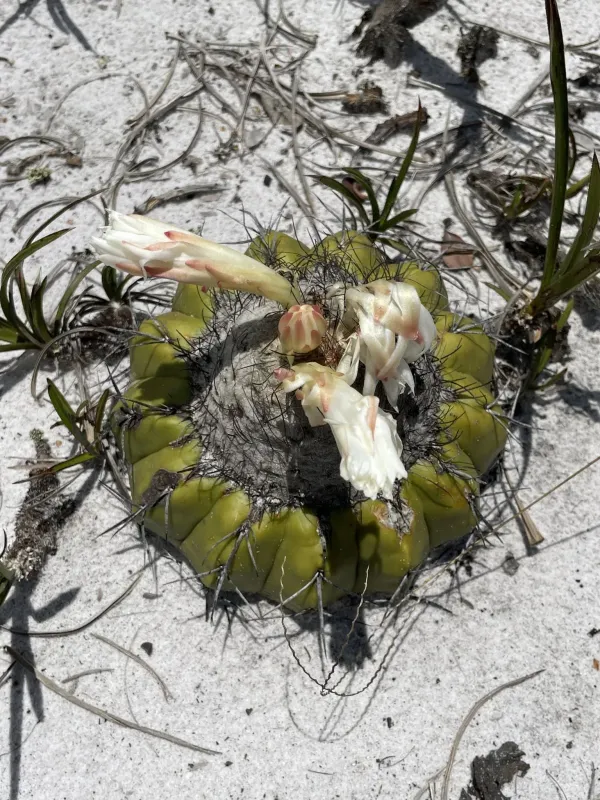
Description
Growing requirements
Discocactus placentiformis belongs to the Cactaceae family, native to the rocky and limestone terrains of Brazil. This species is highly prized for its flattened, disc-like appearance, which makes it a unique addition to any specialized succulent collection.
The plant is characterized by its distinct cephalium, a woolly structure that forms at the apex of mature plants. From this cephalium, fragrant, white, nocturnal flowers emerge, providing a significant ornamental value during the short blooming season typical for this genus.
Regarding climate, this species demands warm temperatures throughout the year. It does not tolerate cold, moist conditions, which can quickly lead to tissue rot. A well-draining substrate, rich in inorganic materials like pumice or coarse sand, is essential for maintaining healthy root development.
Cultural care requires strict irrigation management. During the active growing season, water should be applied only after the soil has completely dried out. During the winter, the plant enters a period of dormancy and should be kept completely dry to ensure it can survive until the next cycle.
Horticultural application is limited to the ornamental nursery trade and private botanical collections. Because it is slow-growing and sensitive to environmental changes, it is considered a challenging species that requires professional expertise to propagate from seeds successfully.
Main diseases and pests
The primary threats include various root rots, typically triggered by improper watering practices or high humidity in poorly ventilated spaces. Prevention involves providing excellent airflow and ensuring that the growing medium is light and porous enough to prevent water accumulation.
Pests such as spider mites and mealybugs are the most common challenges. These organisms tend to hide in the woolly cephalium or along the ribs of the plant. Regular monitoring and the application of appropriate acaricides or systemic pesticides are necessary to prevent significant damage.