
Sweet William (hybrid)
Dianthus barbatus x Dianthus chinensis
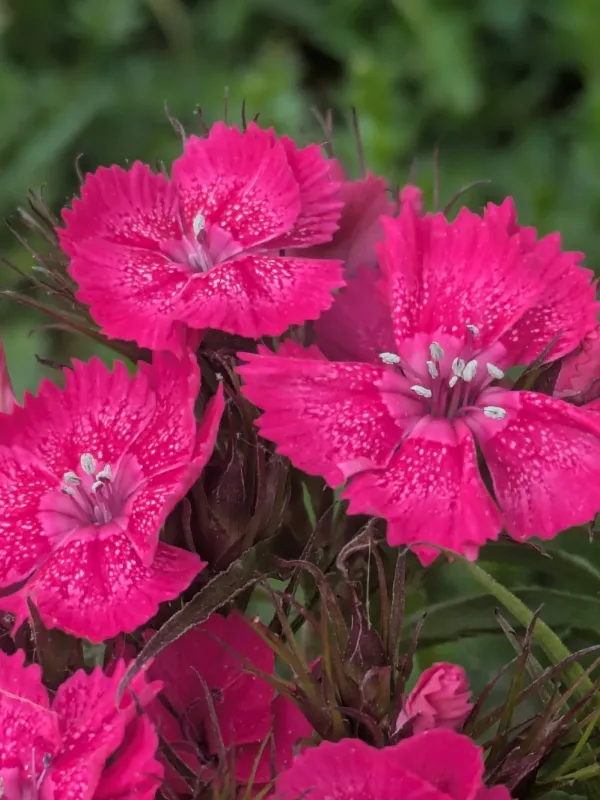
Description
Sowing dates
Sowing hybrid Dianthus seeds for transplants is usually planned for late February or March, allowing for flowering in the very first season.
Using the transplant method ensures more uniform germination and earlier plant development, which is critical for high-quality cut flower production.
In open field conditions, seeds can be sown in May, once the risk of spring frosts has passed and stable temperatures are established.
The optimal temperature for seed germination is +18...+20°C, with uniform emergence occurring within 7 to 10 days after planting.
After the appearance of two pairs of true leaves, seedlings are pricked out into individual pots or trays to promote strong root development.
Growing requirements
This hybrid prefers well-lit areas, as insufficient sunlight leads to stretched stems and reduced color intensity of the flower heads.
The crop has moderate soil requirements: optimal soils are loamy, humus-rich with a neutral or slightly alkaline pH level.
Ensuring proper drainage is essential, as water stagnation in the root zone is detrimental and promotes the development of root rots.
The plant exhibits good cold resistance, however, for optimal vegetation, the air temperature should be maintained between +15...+25°C.
Regular watering is mandatory, but it must be moderate; mulching is recommended during hot periods to retain moisture and prevent overheating.
Main diseases and pests
The most dangerous disease is Fusarium wilt, which affects the vascular system and leads to rapid plant death under excessive moisture conditions.
In high humidity, Dianthus is frequently affected by rust, appearing as characteristic brown pustules on the leaf blades of the plants.
Among pests, the spider mite causes the most damage by sucking sap from the leaves, leading to yellowing and premature wilting during dry spells.
Aphids can also colonize the flower buds, causing deformation and reducing the marketability of the cut flowers, requiring regular monitoring.
Disease prevention includes crop rotation, thinning of planting sites for better airflow, and the use of fungicides at the first sign of infection.
Harvesting
Harvesting is performed in the semi-opened bud stage, when petal color is clearly visible, ensuring a long vase life for the cut flowers.
The best time for harvest is early morning, when tissues are fully turgid, preventing rapid wilting after the stems are cut from the plant.
Stems are cut using a clean pruner, leaving lower internodes to potentially support the formation of secondary flower stalks if maintained well.
After harvesting, the flowers should be placed in cool water and kept in a dark, shaded area until transportation to preserve their quality.
Yield depends on planting density and soil fertility, averaging between 20 to 40 flower stems per square meter depending on the specific hybrid.