
Alpine pink
Dianthus alpinus L.
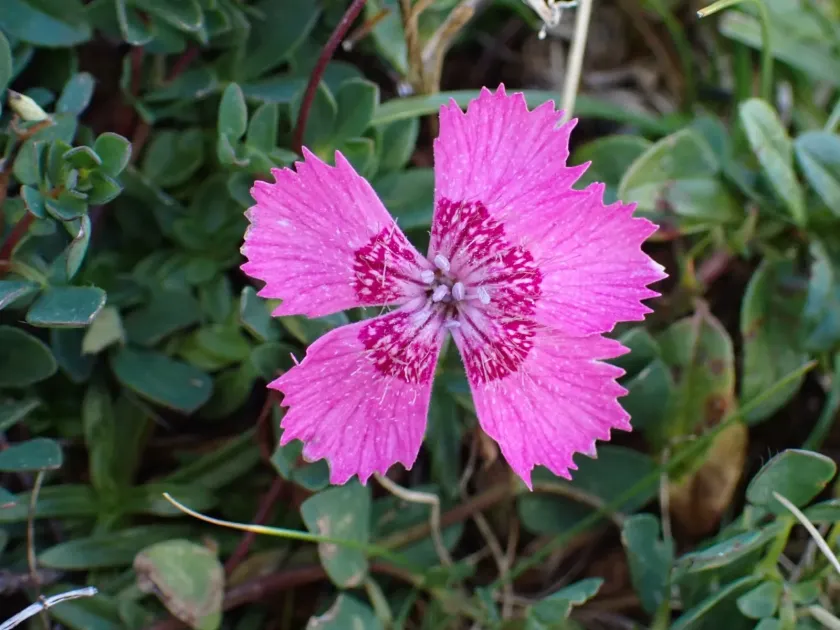
Description
Sowing dates
Alpine pink (Dianthus alpinus L.) is best propagated from seeds sown in late winter or early spring, typically indoors. Using seed trays with a well-draining substrate is recommended for optimal germination rates.
Direct sowing into the rock garden or flower bed is possible in autumn. The seeds benefit from winter cold, which triggers the breaking of dormancy and ensures more vigorous growth upon the arrival of spring.
Surface sowing is essential as the seeds require light to germinate. Cover them only with a fine layer of coarse sand or vermiculite to prevent drying out while allowing light penetration.
Maintain an ambient temperature of about +18 to +20 degrees Celsius. Ensure the growing medium is kept moist but not waterlogged to prevent fungal damping-off of the sensitive seedlings.
Seedlings should be transplanted once they have developed at least two pairs of true leaves. When hardening off for outdoor conditions, do it gradually over a week to acclimatize the plants to sunlight and wind.
Growing requirements
Dianthus alpinus belongs to the Caryophyllaceae family and is native to the mountain ranges of Central Europe. It is a classic alpine perennial designed for cold, high-altitude climates with high ultraviolet exposure.
The primary requirement for this culture is exceptional drainage. It thrives in gravelly or gritty soils that mimic its natural rocky habitat. Heavy soils with high clay content will lead to rapid root rot.
Soil pH should be neutral to slightly alkaline. Incorporating crushed lime or limestone chips into the substrate is a common practice for gardeners working with acidic soils to ensure the health of the plants.
As an alpine species, it prefers full sun. While it is hardy in cold temperatures, it does not appreciate excessive humidity during the summer months, so placing it in a well-ventilated location is crucial.
Regular maintenance involves removing spent flowers to encourage a second flush of blooms and keeping the surrounding area free of weeds that could compete for light and nutrients.
Main diseases and pests
The most significant threats to the health of Alpine pink are pathogens associated with moisture. Fusarium wilt and other soil-borne fungi can cause sudden plant death if drainage is not properly managed.
Pests such as aphids and spider mites can be problematic during hot, dry spells. Regular monitoring of the foliage, especially during the early growth stages, is vital for timely intervention.
Root rot is the most common physiological issue caused by overwatering or poor soil structure. Using coarse grit around the crown of the plant helps to keep the base dry and prevents rot.
In some regions, cutworms or other soil larvae may feed on the roots of young plants. If infestations are observed, biological controls or targeted application of insecticides are recommended.
- Fusarium wilt
- Root rot
- Aphids
- Spider mites
- Fungal leaf spots