
Alpine pink
Dianthus alpinus x Dianthus callizonus
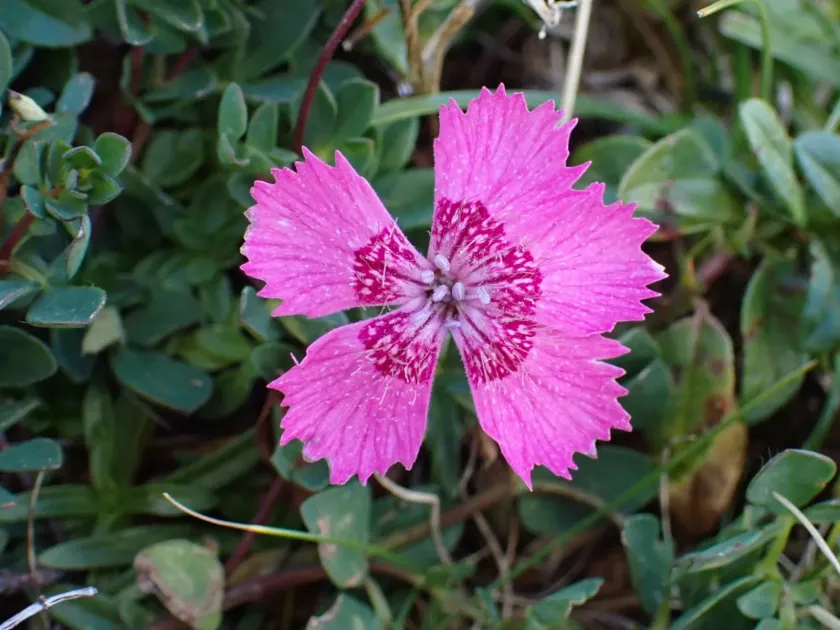
Description
Sowing dates
Sowing seeds of alpine pink in open ground is carried out mainly in late spring, when the danger of late frosts has passed, or in late summer.
The optimal time for obtaining seedlings is March or April, which allows strong plants to be planted in a permanent place in early June.
When sowing, seeds are distributed over the surface of a nutritious substrate, slightly sprinkled with a thin layer of sand or sifted soil.
To accelerate germination, it is important to maintain a temperature within 18–20 degrees and ensure sufficient lighting of the containers.
Seedlings are pricked out in the phase of two or three true leaves, ensuring careful maintenance and gradual hardening before planting in the rock garden.
Growing requirements
Alpine pink is a perennial herbaceous plant of the Caryophyllaceae family, with its natural range in the mountainous regions of Central Europe.
The plant prefers well-lit areas with direct sunlight, as in the shade, the bushes lose their compactness and abundance of flowering.
Soils must be drained, neutral or slightly alkaline, containing a sufficient amount of lime for the active development of the root system.
The crop is extremely sensitive to moisture stagnation, therefore, when planting on heavy clay soils, it is necessary to create a powerful drainage layer of crushed stone or gravel.
In regions with a hot climate, the plant requires moderate watering at the root, while spraying the above-ground part is not recommended to avoid burns.
Main diseases and pests
The main threat to the plant is fungal diseases, such as fusarium and alternaria, which occur when the soil is waterlogged.
When affected by powdery mildew, a characteristic white coating appears on the leaves, which requires treatment with systemic fungicides.
Among pests, spider mites and aphids are the most dangerous, as they actively multiply in dry, hot weather, sucking juices from the shoots.
To prevent the spread of pests, timely weeding is recommended, as weeds can serve as intermediate hosts for insects.
Disease prevention consists of observing agronomic standards, limiting excessive nitrogen nutrition, and ensuring good aeration of the area.