
Deschampsia media
Deschampsia media
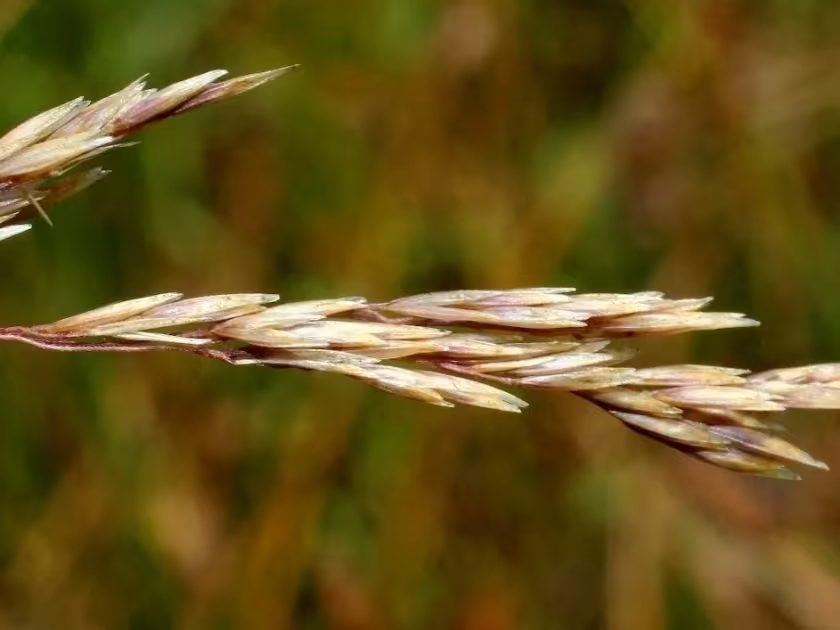
Description
Sowing dates
Sowing of Deschampsia media is typically scheduled for early spring, when the soil retains moisture from snowmelt. This promotes rapid seed germination and ensures successful establishment before the summer heat.
Late autumn sowing is also a viable option in temperate climates, allowing the seeds to undergo natural stratification. The seeds should be sown in rows spaced 15–20 cm apart to provide adequate space for development.
Seed depth should not exceed 1–2 cm, as the seeds are quite small and sensitive to deep planting. The seedbed must be carefully leveled and compacted before sowing to ensure uniform growth.
Post-sowing rolling is essential to ensure good contact between seeds and soil particles. This practice is crucial for achieving uniform and vigorous seedling emergence in field conditions.
The seeding rate ranges from 8–12 kg per hectare for pure stands. When incorporating the species into pasture mixtures, the rate is adjusted based on the composition of other grass and legume species.
Growing requirements
Deschampsia media, a member of the Poaceae family, is a perennial grass that thrives in moist but well-drained habitats. It exhibits high ecological plasticity, allowing it to adapt to various meadow ecosystems.
The plant possesses a robust root system, enabling it to effectively utilize nutrients from deep soil profiles. It shows good tolerance to moderate shade, making it a suitable choice for agroforestry projects.
Optimal growth is observed in loamy and sandy soils with a neutral to slightly acidic pH. The crop is sensitive to waterlogging, so sites with high water tables require adequate drainage systems.
This grass is highly cold-tolerant, capable of surviving significant temperature fluctuations, which makes it suitable for mountainous and northern regions. Supplemental watering is recommended during peak summer months.
Timely nitrogen fertilization is key to maintaining high productivity. It encourages the regrowth of vegetative mass after mowing or grazing, ensuring the density of the sward is maintained throughout the season.
Yield
The yield of green mass is largely determined by soil fertility and the grazing or cutting management system. With intensive care, the crop can provide two to three full harvests per growing season.
For hay production, maximum yield and nutrient concentration are achieved at the booting or early flowering stage. High-quality hay from this species is palatable and rich in protein content.
In pasture settings, productivity is measured by the volume of biomass available for livestock consumption. The grass tolerates grazing well and exhibits rapid recovery of its green surface.
Annual application of phosphorus and potassium fertilizers is recommended to strengthen the root system and enhance the longevity of the pasture, which can be productive for up to 8 years.
Seed harvesting should be performed at the full wax ripeness stage. Efficient timing is critical, as the species is prone to seed shedding, which is a key biological characteristic to monitor.
Main diseases and pests
Deschampsia media has a generally strong immune system, but high humidity can lead to cereal rust. This fungal disease manifests as orange or brown pustules on the leaves, reducing overall forage quality.
Powdery mildew can also affect the crop in dense, poorly ventilated stands. Maintaining optimal sowing densities and good field hygiene are the best preventive measures against fungal outbreaks.
Cereal flies are the primary pests, as their larvae can damage stems during the early growth phases. Regular monitoring of the stand is recommended to identify signs of damage early.
Aphids may aggregate on the panicles to feed on plant sap, which impairs seed development. Targeted insecticide applications may be necessary if infestation thresholds are reached on seed plots.
Crop rotation and the removal of plant residues are essential for managing disease risks. Proper field management significantly lowers the infection potential for the following growing season.
Harvesting
Harvesting for hay is conducted at the start of the flowering period. This ensures the collection of highly nutritious forage that is well-suited for ruminant consumption.
Using mower-conditioners accelerates the drying process, helping to preserve essential nutrients within the leaves. Care should be taken to avoid over-drying, which can lead to excessive leaf loss.
Seed harvesting is carried out via direct combining when the moisture content is approximately 15-18%. Proper calibration of the threshing unit is vital to minimize the loss of small seeds.
Immediate drying or active ventilation is required after seed collection to prevent self-heating. Excessive heat during storage can significantly degrade seed viability and quality.
Systematic mowing or grazing helps keep the pasture free of weeds and stimulates new growth. Effective harvest management is the foundation for sustaining a productive and healthy stand over many years.