
Wavy hair-grass
Deschampsia flexuosa
Description
Growing requirements
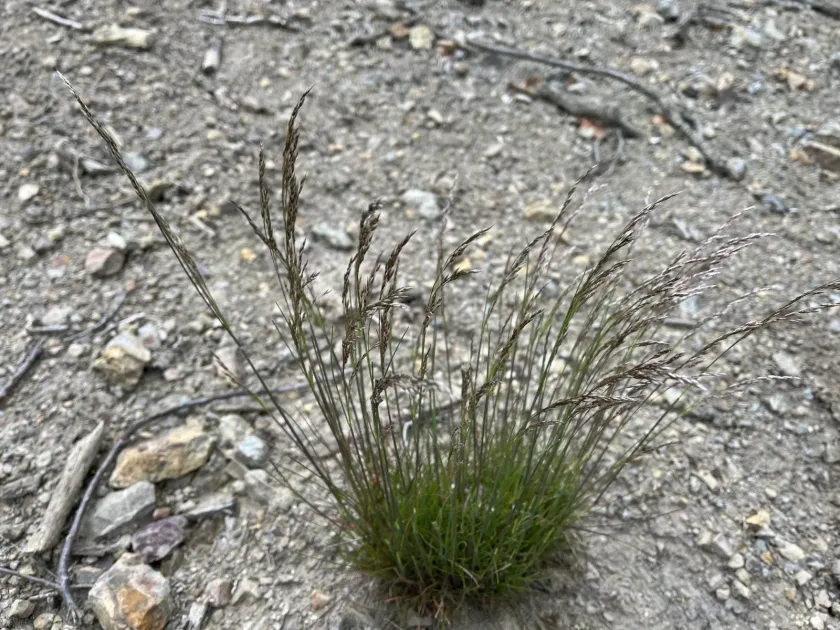
Wavy hair-grass (Deschampsia flexuosa) is a perennial grass species belonging to the family Poaceae. It is native to various temperate regions of the Northern Hemisphere, where it typically inhabits heathlands, woodland clearings, and acidic grassland habitats.
This grass is well-known for its adaptation to poor, nutrient-deficient, and acidic soils. It thrives in conditions where more demanding agricultural grasses struggle, making it an excellent candidate for stabilizing low-fertility sites.
Environmental requirements for the plant include partial shade to full sun exposure and a well-drained substrate. While it is quite hardy, it performs best in cooler climates, as excessive summer heat can reduce its vigorous growth rate.
In terms of management, the grass requires minimal intervention. It does not demand regular fertilization, as it is naturally optimized for habitats with lower resource availability. Seasonal pruning is recommended to maintain the aesthetic quality of the tufts.
The economic utility of Deschampsia flexuosa is primarily focused on landscape architecture and environmental conservation. Its ability to create dense, fine-textured clusters makes it highly desirable for creating wild-style garden spaces and soil erosion control.
Main diseases and pests
The primary diseases affecting Wavy hair-grass include various types of rust and leaf spot fungi that thrive in humid or stagnant air conditions. These infections often discolor the leaves and reduce the plant's overall photosynthetic capacity.
Common pests associated with this species are aphids and leaf-sucking insects that target the soft tissue of the blades. Infestations are generally sporadic and occur most frequently when plants are under stress due to drought or malnutrition.
- Proper spacing to improve airflow
- Avoidance of over-fertilization with nitrogen
- Prompt removal of infected foliage
- Maintaining appropriate moisture levels
When pests or diseases are identified, it is often sufficient to cut back the affected portions of the plant. This mechanical intervention serves both as a curative measure and a way to promote fresh growth of healthy, resistant tissue.
For more severe outbreaks, organic-approved fungicides or soaps can be applied as a targeted treatment. However, maintaining a healthy, well-ventilated growing environment is the most effective long-term defense against biological threats.