
Deschampsia foliosa
Deschampsia foliosa
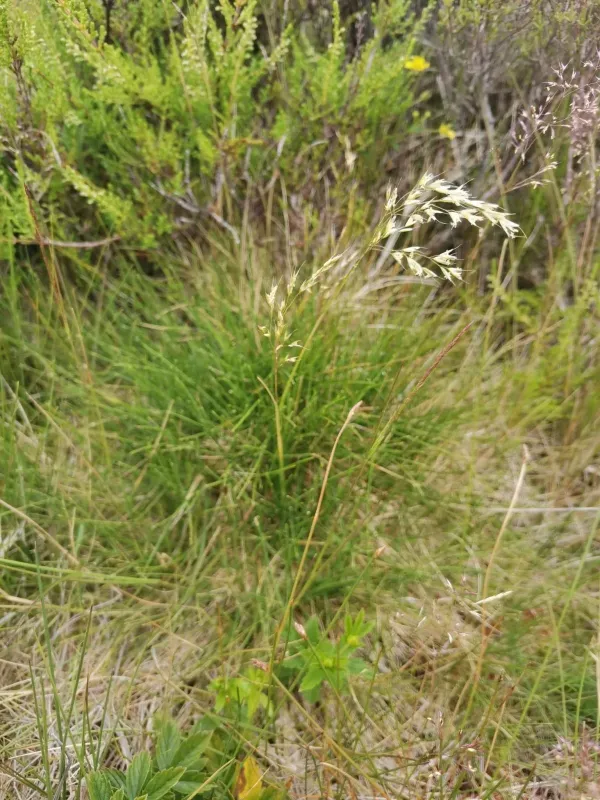
Description
Sowing dates
Deschampsia foliosa, a perennial bunchgrass, is best established through seeds sown in the autumn or early spring to utilize natural soil moisture levels.
The seeds are small and require a firm, weed-free seedbed to ensure maximum contact and to prevent them from being buried too deep for successful germination.
A shallow sowing depth is critical, as exposure to light plays a vital role in stimulating the germination process for this specific species.
After broadcasting, the soil should be lightly rolled to firm the seedbed, which helps maintain moisture around the seeds during the sensitive establishment period.
The optimal planting density should account for the plant's natural habit of forming dense tussocks, allowing sufficient space for root and foliage development.
Growing requirements
This species belongs to the Poaceae family and is native to the Azores, where it thrives in high-altitude, cool, and humid environments.
It prefers acidic, organic-rich soils with good drainage, although it is well-adapted to conditions where moisture levels remain consistently high.
The plant demonstrates excellent hardiness against harsh winds and cold, making it a robust choice for sites that are exposed to Atlantic climate influences.
Deschampsia foliosa is highly light-demanding, though it possesses remarkable tolerance to the cloudy, misty conditions typical of its mountainous native range.
Its deep and extensive root system is essential for nutrient uptake and soil stabilization, particularly on slopes where erosion control is a management priority.
Yield
The agricultural productivity of this grass depends on consistent moisture availability and regular, light grazing regimes that prevent biomass stagnation.
As a perennial crop, it yields a high-quality forage base for livestock, particularly in areas where other grasses struggle to maintain growth.
While primarily a wild species, its potential in cultivated systems is realized through its ability to provide stable biomass under low-input management.
The yield of seeds is variable, often peaking in the second or third year of maturity, provided the plants are not overly stressed by drought or heavy trampling.
Proper nutrient management, specifically nitrogen and phosphorus application, can significantly enhance the leaf density and overall biomass volume of the crop.
Main diseases and pests
Fungal diseases, such as leaf rust and powdery mildew, may occur if the crop is planted in areas with poor airflow or persistent waterlogging.
Insect pests, including various larvae of moths and grass-eating insects, can damage the crown and lower stems, leading to potential thinning of the stand.
Overgrazing poses a major threat, as it weakens the plant's ability to store reserves, leading to a reduction in its competitive advantage against invading weeds.
Management focuses on prevention through maintaining appropriate stocking rates and ensuring that the grass has periods of rest between grazing cycles.
In cases of severe infestation, targeted management strategies should prioritize ecological health, avoiding broad-spectrum pesticides to protect local flora.
Harvesting
For forage production, the optimal time to harvest is during the early vegetative stage, ensuring high protein content and digestibility for livestock.
When producing hay, the grass should be cut and dried quickly to avoid loss of nutrients and to maintain the integrity of the fibrous tussock base.
Harvesting for seed involves collecting the flowering stalks just as they reach full maturity, indicated by a slight change in the color of the panicles.
Post-harvest handling is critical, requiring immediate cleaning and moisture control to ensure high germination rates for future planting seasons.
Mechanical harvesting equipment should be calibrated to maintain a proper cutting height, preserving the basal regrowth potential of the perennial plants.