
Diaphanous bladder fern
Cystopteris diaphana
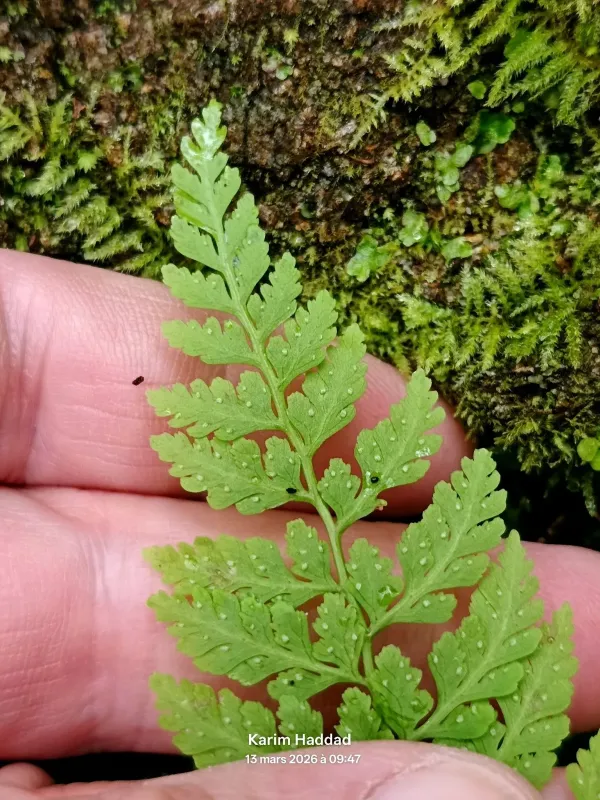
Description
Growing requirements
The Diaphanous bladder fern (Cystopteris diaphana) is a perennial fern species belonging to the Woodsiaceae family. While not a commercial crop, it is a significant species in the study of pteridology and biodiversity conservation, known for its delicate fronds and specific habitat preferences.
This fern naturally thrives in humid, shaded environments, such as deep rocky ravines, crevices in cliffs, and areas with constant moisture. It is typically found in climates with mild, oceanic influences where extreme temperature fluctuations are buffered by local geography.
The plant requires a well-drained, porous growing medium that remains consistently moist but not waterlogged. Soil composition should be high in organic content to support the delicate root system, which is highly sensitive to compaction and anaerobic conditions.
Regarding climatic needs, Cystopteris diaphana demands protection from direct solar radiation. Diffused, soft light is essential for maintaining the integrity of its translucent-like foliage, which is susceptible to dessication in low-humidity environments.
The life cycle of this fern depends on high ambient humidity for spore germination and the subsequent development of the prothallus. These biological requirements make the species an indicator of stable, undisturbed ecological conditions within its native range.
Main diseases and pests
The primary threat to this fern is habitat degradation caused by changes in water runoff and localized climate shifts. Deforestation or activities that reduce the humidity of its micro-niche can quickly lead to the decline of the local population.
Fungal diseases pose a risk when airflow is restricted in the plant's environment. Excess moisture combined with stagnant air creates a breeding ground for pathogens that can decay the fronds and the rhizome structure of the fern.
Herbivory by gastropods, such as slugs and snails, represents a constant threat to the young growth during the active season. Severe infestation can strip the plant of its foliage, leading to physiological exhaustion.
Invasive species often outcompete the Diaphanous bladder fern when environmental conditions change. Because the fern is a slow-growing specialist, it cannot cope with fast-growing weeds that overshadow or displace it from its rock crevices.
Human activities, such as rock climbing or irresponsible land use near cliff faces, can destroy the fragile foothold of the plant. Since its root system is adapted to specific crevices, any mechanical disturbance to the rock substrate is permanent and fatal to the individual plant.