
Cumulopuntia sphaerica
Cumulopuntia sphaerica
Description
Growing requirements
Cumulopuntia sphaerica is a distinctive perennial plant belonging to the Cactaceae family. This species originates from the high-altitude regions of the Andes in South America, primarily within Peru and Chile, where it thrives in rocky and arid high-mountain environments.
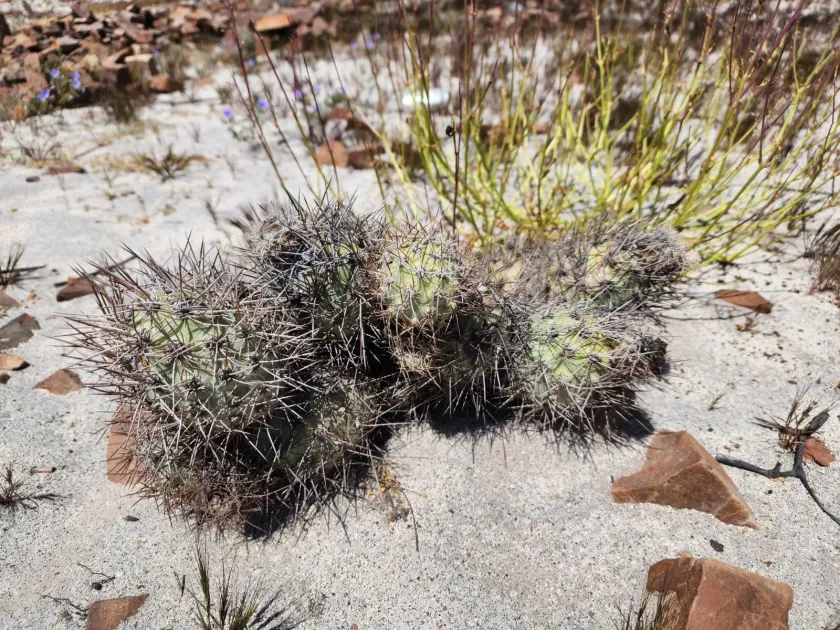
The plant is characterized by its small, spherical segments that cluster together to form dense, cushion-like mats. These segments are heavily armed with spines and glochids, providing an evolutionary advantage against the harsh conditions of its native habitat, including intense sunlight and mountain grazing animals.
Successful cultivation requires a substrate that mimics its natural environment: highly porous, mineral-rich, and capable of perfect drainage. Standard potting soil is often too dense; therefore, a mix of grit, coarse sand, and volcanic rock is recommended to ensure the roots remain oxygenated and dry.
Regarding climatic requirements, this cactus demands long periods of bright, direct sunlight. During the growing season, watering should be moderate and careful, allowing the soil to dry out completely between irrigation sessions. A distinct winter rest period in cool, dry conditions is vital for the plant's long-term health.
In terms of usage, it is primarily favored by succulent collectors and rock garden enthusiasts. Its compact habit and sculptural appearance make it an ideal choice for container gardening, where its slow growth and unique texture can be showcased without the need for significant space or maintenance.
Main diseases and pests
Fungal infections are the most significant threat to the survival of this species. These pathogens typically emerge when the substrate remains excessively damp, combined with insufficient airflow, leading to the rapid decay of the root system and basal segments.
Pests such as spider mites and mealybugs are the most common adversaries in domestic collections. These insects tend to hide between the tight segments of the cactus, making manual inspection and regular monitoring essential to prevent extensive infestations.
For pest control, horticultural oils or systemic insecticides may be used, provided the dosage is strictly followed to avoid chemical damage to the plant's surface. Prevention through constant air circulation is generally more effective than reactive chemical treatments.
Bacterial soft rot can occur if the cactus is physically wounded, allowing pathogens to penetrate the soft inner tissues. If such signs appear, immediate intervention involves excising the affected area and applying an antiseptic agent to seal the wound and prevent further spread.
Maintaining a strictly dry environment during the plant's dormant phase significantly reduces the risk of these issues. By respecting the cactus's natural physiological cycle, growers can avoid many of the biological threats that typically afflict this species in controlled settings.