
Corymbia
Corymbia K. D. Hill & L. A. S. Johnson
Corymbia is a genus of evergreen trees belonging to the Myrtaceae family, formerly classified within the Eucalyptus genus. These trees are highly valued for their resilient timber and ecological versatility.
What the section contains
 Corymbia ptychocarpa
 (F. Muell.) K. D. Hill & L. A. S. Johnson
Corymbia ptychocarpa
Corymbia ptychocarpa (F. Muell.) K. D. Hill & L. A. S. Johnson
 Hybrid Corymbia
Corymbia ptychocarpa x Corymbia ficifolia
Hybrid Corymbia
Corymbia ptychocarpa x Corymbia ficifolia
 Lemon-scented gum
Corymbia citriodora (Hook.) K. D. Hill & L. A. S. Johnson
Lemon-scented gum
Corymbia citriodora (Hook.) K. D. Hill & L. A. S. Johnson
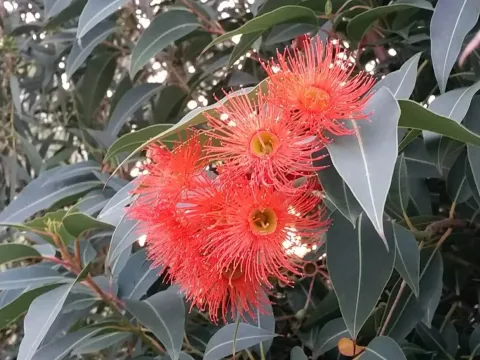
 Red flowering gum
Corymbia ficifolia (F. Muell.) K. D. Hill & L. A. S. Johnson
Red flowering gum
Corymbia ficifolia (F. Muell.) K. D. Hill & L. A. S. Johnson
 Spotted gum
Corymbia maculata (Hook.) K. D. Hill & L. A. S. Johnson
Spotted gum
Corymbia maculata (Hook.) K. D. Hill & L. A. S. Johnson
Corymbia
The culture originates from Australia and requires well-drained, sandy, or loamy soil types to flourish. Its growth pattern is significantly influenced by the availability of solar energy and consistent access to moisture during the establishment phase.
In terms of climate, Corymbia species thrive in tropical and subtropical regions. They demonstrate remarkable adaptation to various moisture regimes, though they perform best in zones with moderate precipitation.
The agronomic management of this culture focuses on proper site selection and soil pH regulation, which should ideally be slightly acidic to neutral to ensure nutrient bioavailability.
Economic applications are diverse: besides wood production, the genus is critical for essential oil extraction and serves as an important source of nectar for local bee populations.
Corymbia trees are susceptible to several fungal diseases, including leaf spot and root rot, which typically manifest in environments with poor drainage and high humidity.
Pest pressures are primarily caused by defoliating insects, such as chrysomelid beetles, and wood-boring pests that can weaken the structural integrity of the trunks.
Integrated Pest Management (IPM) strategies for Corymbia include biological control agents and thinning practices that optimize crown airflow to discourage fungal pathogens.
Silvicultural management requires periodic health inspections to detect early signs of infestation, ensuring that any localized outbreaks are contained before they spread throughout the plantation.
Proper spacing during the planting phase is a fundamental preventive measure, as it minimizes competition for resources and prevents the spread of pathogens between individual specimens.