
Corydalis raddeana
Corydalis raddeana
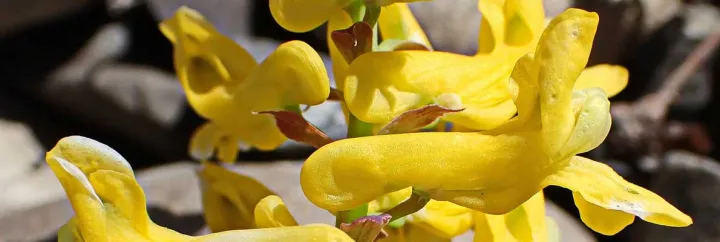
Description
Sowing dates
Corydalis raddeana is an ephemeral plant, meaning its life cycle is compressed into the early spring months. For best results, seeds should be sown in the open ground late in the autumn immediately after harvesting to ensure natural cold stratification during winter.
If spring sowing is required, seeds must undergo artificial stratification in a refrigerator for several months. Seeds should be sown at a shallow depth of 1 to 2 centimeters to ensure they can emerge successfully through the soil.
Vegetative propagation via tuber division is also a highly effective method. The optimal time for dividing the tubers is during the summer dormancy period, when the foliage has completely died back and the plant enters a resting state.
Seed-grown plants typically take two to three years to reach their first flowering stage. Preparing the soil with organic matter prior to planting is crucial for creating a loose, fertile structure that supports root development.
The planting density depends on the desired visual effect: for a naturalistic ground cover, gardeners typically plant about 20 to 25 tubers per square meter.
Growing requirements
As a member of the Fumariaceae family, Corydalis raddeana is native to the Far East, thriving in cool, shaded woodland environments. It is a highly hardy species, well-adapted to surviving harsh, cold winters in temperate climates.
The soil must be light, humus-rich, and possess excellent drainage properties. Standing water during the summer dormancy period is particularly dangerous as it frequently causes the tubers to rot.
A neutral to slightly acidic soil pH is ideal for this species. In its natural habitat, the plant grows in dappled shade, so it requires similar conditions in a garden setting to avoid leaf scorch from excessive sun exposure.
Mulching is a key aspect of cultivation. Applying a layer of leaf mold mimics the natural forest floor, helping to maintain stable moisture levels and insulating the roots against extreme temperature fluctuations.
The plant is resilient to early spring weather patterns and begins its growth cycle as soon as the snow melts, taking full advantage of the moisture available in the soil at the start of the season.
Main diseases and pests
The primary threat to this species is fungal infection caused by waterlogged soil conditions. Root rot can spread rapidly in compacted or poorly drained growing media, leading to the total loss of the tuber.
Common pests include soil-dwelling larvae and slugs that feed on tender foliage during the spring. Such damage often serves as an entry point for secondary bacterial or fungal diseases.
Preventative care involves careful irrigation management and ensuring that the planting site has adequate aeration. If disease is detected, affected plant parts should be removed immediately and the area treated with appropriate fungicides.
While viral infections are relatively uncommon, affected plants should be isolated or removed to prevent spread. Using high-quality, disease-free planting stock is the best defense against long-term problems.
Regular weeding reduces competition for soil nutrients and improves air circulation, which creates an environment where fungal pathogens struggle to thrive, thus promoting overall plant health.
Harvesting
Corydalis raddeana is primarily cultivated for its aesthetic value in garden landscapes. Harvesting of tubers for transplanting or storage must only take place when the plant is in deep summer dormancy.
Once the foliage has yellowed and withered, tubers are carefully lifted from the soil, cleaned of debris, and left to dry in a cool, shaded, and well-ventilated location before being stored.
Storage should be conducted in a slightly moist medium, such as peat or sand, at cool temperatures to prevent the tubers from dehydrating during the winter period before the next planting cycle.
When collecting seeds for further cultivation, they should be harvested as soon as they turn dark but before the capsules split. This allows for controlled propagation and avoids loss through random scattering.
While not a major commercial agricultural crop, this species is highly valued by botanical collectors and nursery specialists for its unique appearance and its ability to naturalize in challenging shady garden spots.