
Corydalis meifolia
Corydalis meifolia
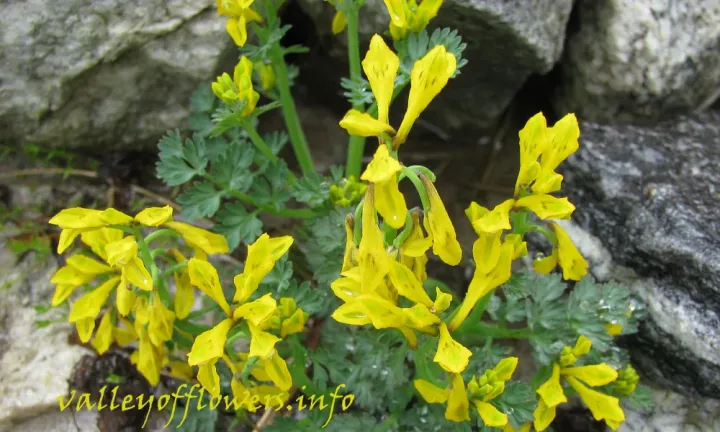
Description
Growing requirements
Corydalis meifolia is a perennial herbaceous plant belonging to the Papaveraceae family. It is native to the high-altitude regions of the Himalayas and the Tibetan Plateau, where it has adapted to cold climates and rocky terrain.
Botanically, the plant is characterized by its fern-like, finely divided foliage and dense clusters of colorful flowers. The sturdy rhizome system serves as a survival mechanism, allowing the plant to thrive in nutrient-poor but well-draining alpine soils.
Cultivating this species requires mimicking its natural habitat. It demands a substrate with excellent drainage, preferably a mix of coarse sand, gravel, and organic humus. The plant cannot tolerate stagnant water, as it quickly leads to root decay.
Ideal environmental conditions include a cool, temperate climate. In lower elevations, it is essential to provide partial shade during the hottest part of the day to prevent heat stress, while ensuring consistent airflow around the plant foliage.
The economic and research interest in Corydalis meifolia is primarily driven by its phytochemical profile. It is studied for its diverse range of alkaloids, which are traditionally valued in local medicine for their potential pharmacological properties.
Main diseases and pests
The primary threats are root and crown rots, typically triggered by improper watering practices or heavy, water-retentive soils. Maintaining a gritty and aerated soil texture is the most effective preventative measure.
Common pests include slugs and snails, which are attracted to the succulent-like foliage during the damp spring months. Protective barriers such as copper tape or fine gravel around the crown are recommended for effective pest management.