
Ledebour's corydalis
Corydalis ledebouriana
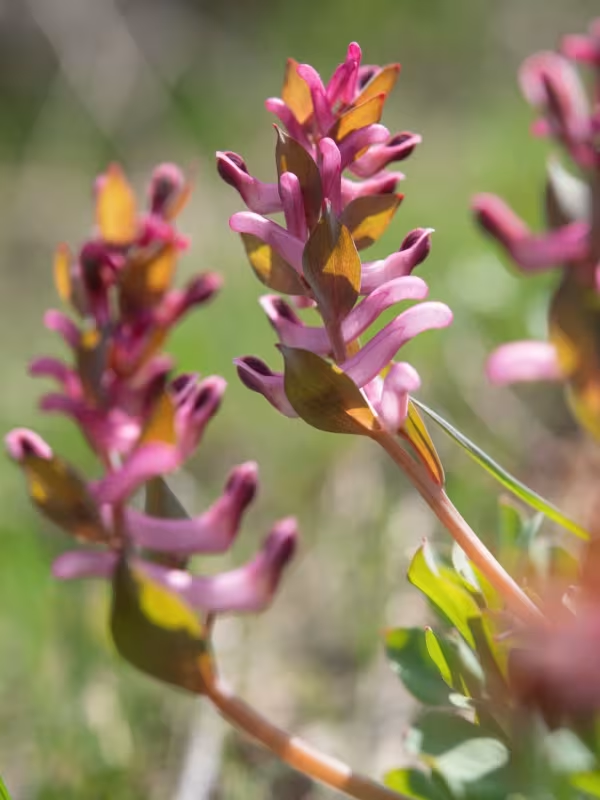
Description
Growing requirements
Ledebour's corydalis (Corydalis ledebouriana) is a distinctive perennial belonging to the Papaveraceae family. As a typical spring ephemeral, it completes its life cycle within a few weeks before the summer dormancy period begins.
Originating from the mountainous regions of Central Asia, specifically the Pamir-Alay and Tian Shan ranges, this plant is adapted to rocky slopes. It has evolved to thrive in environments with sharp temperature fluctuations and distinct seasonal cycles.
To cultivate this species successfully, growers must prioritize soil drainage. The tubers are highly susceptible to rot if allowed to sit in stagnant water, so a gritty, well-draining substrate is essential for long-term survival.
The plant prefers cool and moist spring conditions, followed by a dry and warm summer resting period. It is crucial to ensure the area remains undisturbed during the summer dormancy to prevent premature growth or decay.
In terms of agricultural practice, tubers should be planted at an appropriate depth to protect them from superficial temperature extremes. Low competition from other aggressive plants is necessary for the corydalis to establish a healthy population.
Main diseases and pests
Fungal pathogens represent the most significant threat to the health of the plant. Root rots triggered by high soil moisture levels frequently decimate the tuber populations if the drainage conditions are not optimal.
Pests such as soil-dwelling nematodes and various insect larvae can damage the root system. Effective crop management includes proper site selection to avoid areas with a history of persistent soil infestations.
Small rodents pose a severe threat, as they often forage for tubers during the winter months. Protecting bulbs with wire mesh or similar barriers is a common practice for gardeners in regions with high rodent activity.
Abnormal climatic conditions, such as early warm spells followed by harsh frosts, may kill the emerging shoots. Providing a light protective layer of mulch can help mitigate these risks without trapping excessive humidity.
- Fungal root rots
- Soil nematodes
- Rodent damage
- Stem rot in humid conditions