
Horned Corydalis
Corydalis cornuta
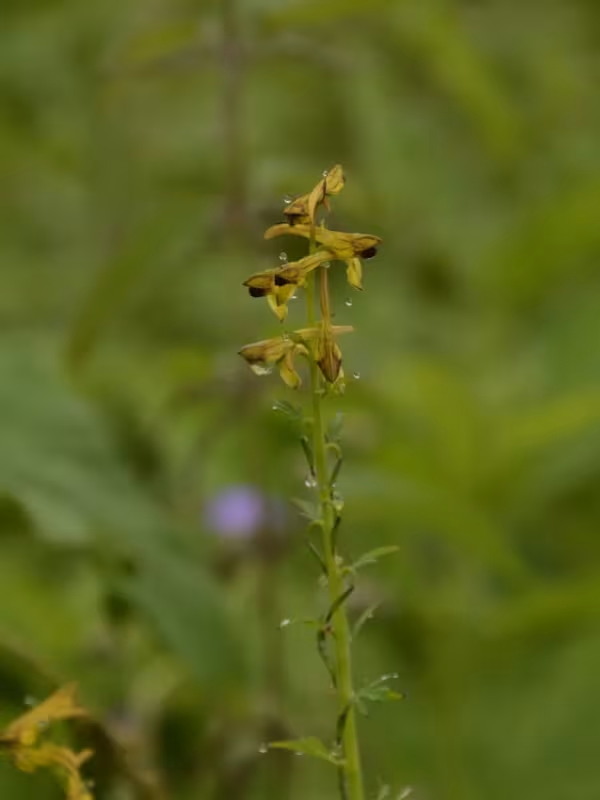
Description
Sowing dates
Horned Corydalis (Corydalis cornuta), belonging to the Papaveraceae family, is an elegant perennial ephemeral. The seeds are typically sown before winter in open ground to undergo natural stratification.
When sowing in spring, seeds require pre-chilling for 1–2 months to ensure successful germination. The planting depth should not exceed 1–2 centimeters for optimal emergence.
Seedlings emerge uniformly once stable positive temperatures are established. Initial growth is slow as the plants focus on root system development and nutrient storage.
The best time to divide mature clusters is during the biological dormancy period, which occurs after the aerial part withers. Transplanting is successful if the root ball remains intact.
Choosing a site for sowing should account for the plant's need for shade and moisture, as adult specimens are sensitive to soil desiccation.
Growing requirements
This plant prefers semi-shaded areas with loose, humus-rich soil. Ideal conditions include forest leaf litter or well-drained loams with a neutral to slightly acidic pH.
The crop is highly demanding regarding substrate moisture during the active growing season. However, waterlogging at the roots is fatal and frequently leads to rot.
A moderately cool climate is necessary for normal growth. During summer droughts, the aerial part quickly yellows and dies back, entering deep dormancy.
Applying complex organic fertilizers in early spring stimulates flowering and allows the plant to accumulate sufficient energy for forming replacement buds.
The plant demonstrates high frost resistance, allowing it to be grown in temperate climate zones without additional winter protection.
Main diseases and pests
The primary threat to Horned Corydalis is root rot caused by overwatering and poor soil aeration. Affected specimens should be promptly removed from the planting site.
In early spring, young shoots may be damaged by slugs and snails, which actively feed on succulent leaf tissues in damp weather conditions.
Viral diseases, such as mosaic, may manifest as leaf deformation and discoloration. Prevention involves controlling insect vectors that spread these pathogens.
To protect against pests, it is recommended to use barrier methods or specialized molluscicides at the beginning of the growing season.
Regular weeding around the plantings helps prevent the spread of fungal spores and ensures better air circulation in the root zone.
Harvesting
Horned Corydalis is cultivated as an ornamental plant, so harvesting refers to collecting seeds for propagation. Seed pods ripen unevenly and tend to burst quickly.
To obtain high-quality seeds, pods should be harvested while slightly under-ripe, just as they begin to turn a lighter, characteristic shade.
Collected seeds are ripened in a well-ventilated dry area, cleaned from debris, and stored in paper bags until the next sowing season.
The aerial part of the plant should be cut only after it has naturally dried, allowing nutrients to fully translocate into the root system.
Timely harvest of the seeds prevents uncontrolled self-seeding, which can lead to overcrowded plantings and a decline in varietal quality.